Celebrity
Who Is Alastair Crooke? The Fascinating Life and Career of Frederick Montague Warren Crooke’s Son

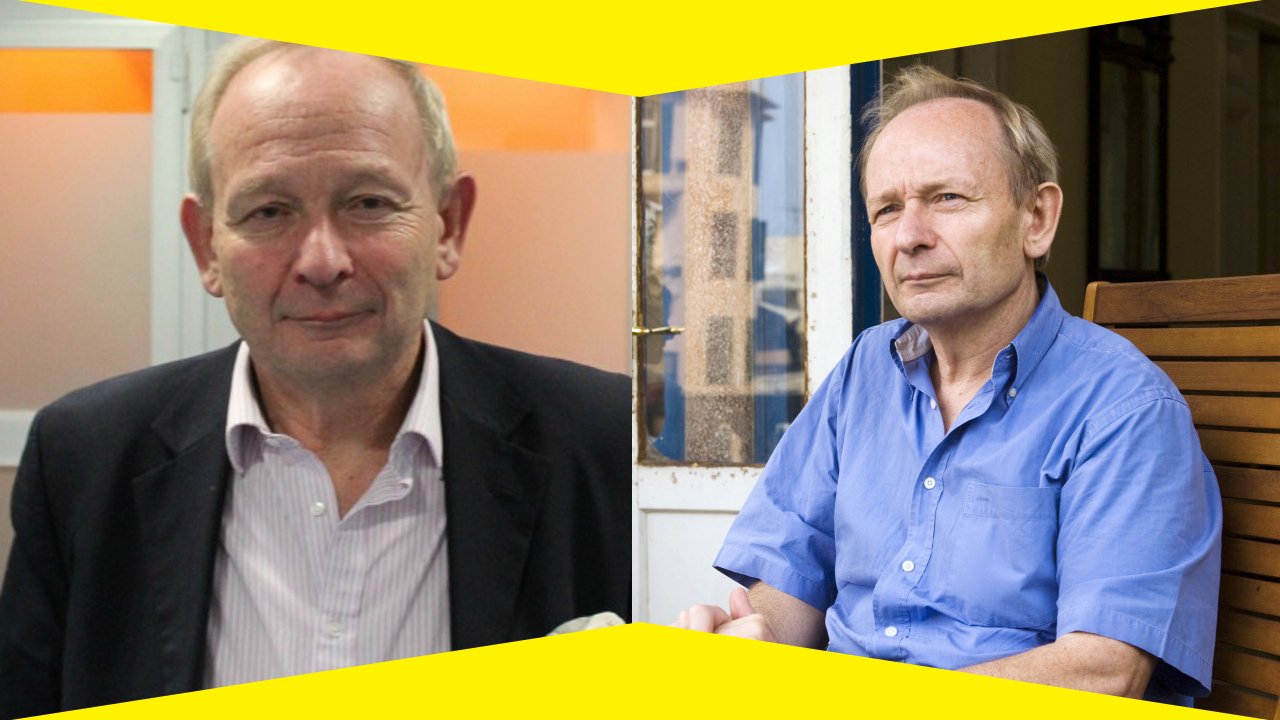
Alastair Crooke is one of Britain’s most closely watched former diplomats, a man whose decades inside MI6 and European Union diplomacy gave him a rare vantage point on the Middle East’s most fraught conflicts. Born into a family with a strong military and colonial background, he grew up far from the corridors of Whitehall before eventually becoming one of the few Western officials willing to sit across the table from groups such as Hamas and Hezbollah. Today, as the founder of the Conflicts Forum and a widely read commentator on geopolitics, Crooke continues to shape debates about the West’s relationship with political Islam and the shifting balance of global power. This article traces his family origins, education, decades-long career and the legacy he has built as an author and analyst.
Alastair Crooke: Quick Bio Table
| Detail | Information |
|---|---|
| Full Name | Alastair Warren Crooke |
| Date of Birth | 30 June 1949 |
| Place of Birth | Dún Laoghaire, Ireland |
| Father | Frederick Montague Warren Crooke |
| Mother | Shona Ann Thomson |
| Sibling | Ian W. T. Crooke (former SAS officer, commanded 23 SAS Regiment) |
| Education | University of St Andrews (Politics and Economics, 1968–1972) |
| Nationality | British |
| Occupation | Former diplomat, ex-MI6 officer, geopolitical analyst, author |
| Known For | Founder and Director of the Conflicts Forum |
| Notable Role | Middle East advisor to Javier Solana, EU CFSP (1997–2003) |
| Honour | Companion of the Order of St Michael and St George (CMG), 2004 |
| Notable Book | Resistance: The Essence of the Islamist Revolution (2009) |
| Children | Five |
Early Life and Family Background
Alastair Warren Crooke was born on 30 June 1949 in Dún Laoghaire, a coastal town near Dublin, Ireland. He is the son of Frederick Montague Warren Crooke and Shona Ann Thomson, and his upbringing carried a strong thread of military service running through both sides of the family.
His elder brother, Ian W. T. Crooke, followed a distinguished military path of his own, rising through the ranks of the Special Air Service and eventually commanding 23 Special Air Service Regiment. Growing up alongside a sibling destined for elite military command appears to have instilled in Alastair a similar appetite for service in demanding and often dangerous environments, though his own path would run through intelligence and diplomacy rather than active combat.
Details of his father Frederick Montague Warren Crooke’s own career remain relatively scarce in the public record, as is often the case with families connected to Britain’s diplomatic and military establishment during the mid-twentieth century. What is clear is that the Crooke family’s background gave Alastair an early exposure to a world of institutional service, one that would later define his own working life.
For his education, Crooke attended the University of St Andrews in Scotland, one of Britain’s oldest and most respected universities, where he read Politics and Economics between 1968 and 1972. This academic grounding in political theory and economic thinking would later prove invaluable in his analytical work, both within government service and in his subsequent career as an independent commentator.
Entry Into British Intelligence
After completing his studies, Crooke joined the Secret Intelligence Service, commonly known as MI6, embarking on a career that would span nearly three decades. Working under diplomatic cover, he was posted to some of the most volatile regions on earth, including Northern Ireland during the Troubles, South Africa, Cambodia, Colombia, Pakistan and the wider Middle East.
This extraordinarily broad geographic experience set Crooke apart from many of his contemporaries. Rather than specialising narrowly in one region, he developed a rounded understanding of insurgency, sectarian conflict and post-colonial politics across several continents. His early career reportedly involved sensitive work connected to arming groups resisting Soviet-backed forces, experience that sharpened his understanding of how Western intelligence services engage with armed political movements.
By the time his career moved into its next phase, Crooke had built a reputation within Whitehall as someone comfortable operating in ambiguous, high-risk environments where formal diplomacy alone could not resolve deep-rooted conflicts.
The European Union Years and Middle East Diplomacy
In 1997, Crooke transitioned into a new and highly visible role as Middle East advisor to Javier Solana, the European Union’s High Representative for Common Foreign and Security Policy. He held this position until 2003, a period that placed him at the centre of some of the most sensitive diplomatic episodes of the Second Intifada.
During these years, Crooke helped negotiate a number of de-escalations and military withdrawals in the Palestinian territories, working directly with Islamist movements that most Western officials avoided engaging with entirely. He played a significant role in the diplomatic efforts surrounding the 2002 Siege of the Church of the Nativity in Bethlehem, a tense standoff that drew international attention and required delicate, behind-the-scenes negotiation.
Crooke also served as a staff member on Senator George Mitchell’s Fact Finding Committee, which investigated the causes of the Intifada, and he acted as an advisor to the International Quartet on the Middle East. His willingness to hold clandestine meetings with Hamas leadership in June 2002 marked him out as a controversial figure, since he consistently argued that lasting peace could not be achieved by isolating groups that commanded genuine popular support, however uncomfortable that engagement might be for Western governments.
In September 2003, Crooke was instructed to leave the Middle East for personal security reasons, against his own wishes. A British embassy spokesperson at the time acknowledged that he had done an outstandingly difficult job under extremely difficult conditions. The following year, in the 2004 New Year Honours list, he was awarded the CMG, the Order of St Michael and St George, in recognition of his services to the advancement of the Middle East peace process.
Founding the Conflicts Forum
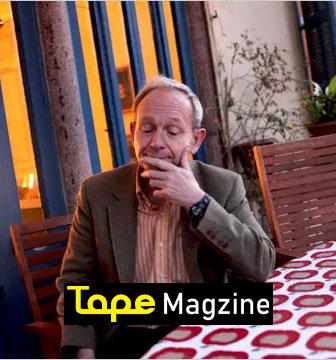
Having left official government service, Crooke did not step away from Middle East affairs. Instead, in 2004 he founded the Conflicts Forum, a Beirut-based organisation dedicated to fostering engagement between political Islam and the West. The organisation’s core mission has always been to help Western policymakers and the wider public understand Islamist movements, including their political motivations and their armed resistance activities, rather than dismissing them outright as purely terrorist entities.
The Conflicts Forum was initially funded through a combination of private donors, a modest grant from the United States Institute of Peace, and some support connected to European Union channels. Over time, it evolved into a respected platform for analysis, conferences and policy discussion focused on complex geopolitical situations, particularly those involving the Middle East, Iran and the broader question of Western relations with the Islamic world.
Crooke’s advocacy for dialogue drew sharp criticism from neoconservative commentators, some of whom accused him of appeasing groups responsible for violence. He rejected this characterisation, consistently framing his position as one of realism rather than sympathy, arguing that ignoring powerful political movements does not make them disappear.
Career as an Author and Commentator
Beyond his diplomatic and organisational work, Crooke has built a substantial reputation as a writer and public intellectual. In 2009, he published his best-known book, Resistance: The Essence of the Islamist Revolution, through Pluto Press. The book traces the intellectual and religious roots of the Islamist Revolution from its origins in Egypt, through Najaf and Lebanon, to Iran and the Iranian Revolution itself.
In the book, Crooke argues that the West faces a broad mobilisation against its dominant global project, rooted in religious and cultural themes stretching back over five centuries. He presents this not simply as a security challenge but as a genuine clash between differing systems of values and visions for society, a framing that distinguished his analysis from more conventional counterterrorism narratives of the period.
Since then, Crooke has remained a prolific commentator, contributing regular articles and analysis pieces on geopolitics, international relations and what he often describes as the West’s fundamental global anguish. His writing frequently appears across international outlets, and he is a regular voice in interviews, television appearances and radio commentary discussing subjects ranging from Iran and Russia to shifting global power structures. He is also recognised as a member of the United Nations’ Alliance of Civilizations Global Experts panel, reflecting his standing as a cross-cultural analyst rather than a purely partisan voice.
Personal Life
Crooke has largely kept his personal life outside the public eye, a pattern consistent with his background in intelligence work. Publicly available information indicates that he has five children, though he rarely discusses family matters during interviews or public appearances, preferring instead to keep the conversation focused on geopolitical analysis and diplomatic history.
His religious beliefs and private spiritual views have also never been formally confirmed, despite decades of close engagement with Islamist political movements and Middle Eastern societies. Most profiles and interviews of Crooke focus almost entirely on his professional record rather than personal biography, a reflection of both his own preference for privacy and the nature of the fields in which he has worked throughout his career.
Why Alastair Crooke Remains a Significant Voice Today
What makes Crooke’s career genuinely distinctive is the breadth of his direct experience. Few Western analysts commenting on the Middle East today can claim to have personally negotiated with Hamas leadership, worked inside a European Union crisis response, and served under diplomatic cover across four continents. This depth of first-hand exposure lends his analysis a credibility that purely academic commentators often lack, even among readers who disagree with his conclusions.
His consistent argument, that durable peace requires engaging with a movement’s actual constituency rather than simply labelling it as illegitimate, has grown more relevant as Western governments continue to grapple with how to respond to political Islam across the region. Whether writing about Iran’s regional strategy, the war in Gaza, or the broader recalibration of global power between Washington, Moscow and Tehran, Crooke draws on decades of lived diplomatic experience rather than theoretical modelling alone.
Conclusion
Alastair Crooke’s journey, from the son of Frederick Montague Warren Crooke growing up in Dún Laoghaire to a decorated MI6 officer, EU diplomat, and internationally recognised geopolitical analyst, reflects a career built on direct engagement with the world’s most difficult conflicts. Through the Conflicts Forum and his continued writing, he remains an influential, if often controversial, voice urging the West to understand political Islam rather than simply oppose it. His story stands as a rare example of a career that bridges secretive intelligence work, formal diplomacy and public intellectual life.
Frequently Asked Questions About Alastair Crooke
1. Who is Alastair Crooke?
Alastair Crooke is a former British diplomat and MI6 intelligence officer who later became a geopolitical analyst and author, best known for founding the Beirut-based Conflicts Forum.
2. When and where was Alastair Crooke born?
He was born on 30 June 1949 in Dún Laoghaire, Ireland.
3. Who are Alastair Crooke’s parents?
His father was Frederick Montague Warren Crooke and his mother was Shona Ann Thomson.
4. Does Alastair Crooke have any siblings?
Yes, his elder brother is Ian W. T. Crooke, a former Special Air Service officer who commanded 23 Special Air Service Regiment.
5. Where did Alastair Crooke study?
He studied Politics and Economics at the University of St Andrews between 1968 and 1972.
6. What organisation did Alastair Crooke found?
He founded the Conflicts Forum in 2004, an organisation based in Beirut that promotes engagement between political Islam and the West.
7. What role did Crooke play in EU diplomacy?
From 1997 to 2003, he served as Middle East advisor to Javier Solana, the European Union’s High Representative for Common Foreign and Security Policy.
8. Has Alastair Crooke written any books?
Yes, his best-known work is Resistance: The Essence of the Islamist Revolution, published by Pluto Press in 2009.
9. Did Alastair Crooke receive any honours?
He was awarded the CMG (Companion of the Order of St Michael and St George) in the 2004 New Year Honours list for services to the Middle East peace process.
10. Does Alastair Crooke have children?
Yes, publicly available information indicates that he has five children, though he keeps most family details private.


Who Is Henry Elkind? The Inspiring Life Story of Paul Newman’s Grandson

Who Is Imani Cheadle? The Amazing Life Story of Don Cheadle’s Daughter

What Models Does ImagineArt Actually Run?

BadSeed Tech Carpio Explained: What This Collab Actually Is

Metronidasool Fact-Checked: The Medication Behind This Spelling

Who Is Nicole Saphier? The Amazing Life Story of Dr Paul Saphier’s Wife

Who Is Jaisal Andrews? Inside the Life of Naveen Andrews’ Son

Who Is Saffron Le Bon? The Untold Life Story of Benjamin Compston’s Wife

Who Is Tanja Rosner? The Untold Life Story of Tate McRae’s Mother

Voozon.com Explained: What It Really Is Behind the “Knowledge Platform” Label

Who Is Sue Johnston? The Remarkable Life Story of Joel Palmentor’s Mother

Who Is Kerri Browitt Caviezel? The Inspiring Life Story of Jim Caviezel’s Wife
-
 Celebrity2 months ago
Who Is Jaisal Andrews? Inside the Life of Naveen Andrews’ Son
-
 Celebrity2 months ago
Who Is Saffron Le Bon? The Untold Life Story of Benjamin Compston’s Wife
-
 Celebrity2 months ago
Who Is Tanja Rosner? The Untold Life Story of Tate McRae’s Mother
-
 Software4 weeks ago
Voozon.com Explained: What It Really Is Behind the “Knowledge Platform” Label
-
 Celebrity2 months ago
Who Is Sue Johnston? The Remarkable Life Story of Joel Palmentor’s Mother
-
 Celebrity2 months ago
Who Is Kerri Browitt Caviezel? The Inspiring Life Story of Jim Caviezel’s Wife
-

 Celebrity2 months ago
Who Is Otelia Cox? The Remarkable Life Story of Tony Cox’s Wife
-

 Software4 weeks ago
Bynethi Com Explained: What to Verify Before Trusting This Site