Technology
Odoo Development Company: Custom ERP Solutions for Business Growth

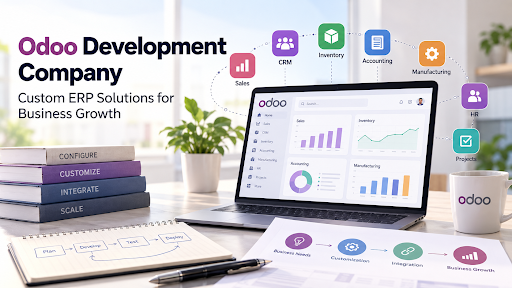
Odoo ships a new major version every year. Version 19 arrived in September 2025, and Odoo’s own support table has version 17 on standard support only until September 2026. Do the math. Whatever you’re buying today has a shelf life, and every customization bolted onto it shares that shelf life. It’s the part people forget when they go looking for an Odoo development company.
Gartner expects more than 70% of recently implemented ERP projects to miss their original business goals by 2027. Go-live takes the blame. We’d argue plenty of the damage lands later, around the second or third upgrade, when nobody can remember why half the custom code exists.
What an Odoo Development Company Actually Does
Honestly, less coding than you’d guess. A good one spends most of its time deciding what not to build.
First stop is always the settings screen. You’d be amazed how many “custom” requests turn out to be a checkbox nobody ticked. Studio comes next, Odoo’s low-code builder: a few extra fields, a reworked form, a basic approval flow. One consultancy points out that Studio changes are harder to keep under version control, and that a heap of automated actions gets confusing fast. Beyond Studio you’re writing real modules in Python and XML on top of Odoo’s core, and that’s where the budget piles up (along with the long-term cost).
The Yearly Clock
Odoo’s current documentation gives each major version three years of standard support, followed by extended support for an extra fee. Odoo Online customers also get intermediate releases every couple of months. Odoo.sh and on-premise installs don’t, which means on those you decide when to upgrade.
You can start an upgrade from any version, though the destination has to be a supported one. Odoo does leave a six-month grace period after a version’s end-of-life date. Wait longer than that, and the distance between where you are and where you need to be keeps growing, with somebody on the hook to cover it.
Without customizations, a database can often move on Odoo’s own migration scripts plus a round of testing. With them, a developer opens every custom module in turn. Does it still run on the new core? Does it still do what the business thinks it does? Sometimes the answer arrives with a hand-written migration script attached.
Where Odoo Runs Matters
This one catches buyers out. Odoo Online, the fully hosted version, won’t run custom Python modules at all. Configuration and Studio are as far as it goes. Custom code lives on Odoo.sh, Odoo’s managed platform, which deploys from Git and gives you development and staging copies next to production. The other option is a server you run yourself.
The hosted route has limits of its own: no root access, and Odoo’s worker and storage caps apply. Run the thing yourself and nothing is off-limits, but then every update and every late-night server problem belongs to you. In practice, choosing where Odoo lives means choosing how much you’re free to customize.
Where Customizations Break
Talk to people who migrate Odoo databases and the data barely comes up. What they grumble about is custom modules and third-party integrations. Automated actions and scheduled jobs get a mention too, along with the security rules wrapped around them.
Screen tweaks show it well. A developer anchors a change to some element of an existing view with an XPath expression. A later Odoo version renames that element, the expression matches nothing, and the screen won’t load until somebody fixes it. One broken view you can shrug off. Forty means a project plan.
Worse is the module that copied a slab of Odoo’s own code instead of extending it. Nothing crashes. It just keeps behaving the old way while the rest of the system moves on, and the mismatch turns up weeks later in somebody’s numbers.
What an Upgrade Costs
No honest answer exists until someone reads your code. Published figures run from a few thousand dollars to tens of thousands per upgrade, mostly depending on how many custom modules are involved, and nearly all of them come from firms that sell the work. We’d treat them as loose guesses.
What you want instead is a written estimate from a real look at your modules, with a range for each. That’s the only number worth planning around.
Community Modules
Plenty of gaps never need new code. The Odoo Community Association (OCA) is a nonprofit, set up in 2013, and contributors from all over write free open-source add-ons for Odoo through it. It’s separate from Odoo SA.
Code somebody else maintains is code you don’t migrate yourself, which is the appeal. The catch is that licenses and upkeep both differ from module to module, and Odoo SA’s own support policies don’t cover them. One that fit perfectly last year can fall behind when a new version lands.
How a Good Odoo Customization Company Behaves
Picture the Odoo customization company you’d want. Before it quotes anything, it hands you a gap list: what Odoo already does, and what it doesn’t. It can name a customization it removed because a newer Odoo release made it pointless. New versions get tested on a staging copy by your own people. And when the project ends, the source code and documentation are yours, deployment scripts included.
Now picture the other kind. The quote lands after one phone call, with a fixed list of modules. Nobody can say who will look after a custom module in a year. The integrations have no alerting, so the first person to notice a broken payment connection is a customer.
Fixed Price or Time and Materials
Which model fits depends on how settled the scope is, and any Odoo customization company should be able to tell you which one it’s proposing and why. Fixed price works once discovery has nailed the scope down, since everybody agrees what “done” means. Time and materials work while requirements are still moving, provided there’s regular reporting and a cap.
Projects sour when a fixed price lands on a vague scope. Somebody eats the surprise later, and it’s rarely the firm. With an offshore team, a few overlapping working hours a day is the usual bare minimum for a project that runs for months.
When Custom Work Pays Off
None of this is an argument against customizing. Odoo already copes with multiple companies and currencies, plus several warehouses, and pricelists go further than most teams expect before anyone needs code. Growth finds the edges, though. Pricing that varies by customer in ways no pricelist captures is one. A production flow your rivals can’t copy is another. An integration that ends manual re-keying between two systems earns its cost as well. Cosmetic tweaks don’t, and neither does anything that exists purely because the team likes the old way.
BiztechCS, an Odoo Ready Partner with 19+ years in software delivery, tends to begin with the gap analysis and push as much as it can toward configuration before any module gets written. Scoping takes longer. Owning the result costs less.
So when you compare any Odoo development company, the price the second year.


CNLawBlog.com Fact-Checked: Is This Really a Legal Information Site?

SparkPressFusion.com Explained: Why This Isn’t the Real SparkPress

CamoCrypt.com Breakdown: A Crypto News Blog, Not an Encryption Tool

GadgetFreeks.com Reviewed: Useful Tech Tools, Risky Streaming Links

Charlotte Hornets vs Golden State Warriors Match Player Stats: Full Box Score and Top Performers

Pittsburgh Steelers vs Chargers Match Player Stats: Who Led the Way?

Who Is Jaisal Andrews? Inside the Life of Naveen Andrews’ Son

Who Is Saffron Le Bon? The Untold Life Story of Benjamin Compston’s Wife

Who Is Tanja Rosner? The Untold Life Story of Tate McRae’s Mother

Voozon.com Explained: What It Really Is Behind the “Knowledge Platform” Label

Who Is Sue Johnston? The Remarkable Life Story of Joel Palmentor’s Mother

Who Is Kerri Browitt Caviezel? The Inspiring Life Story of Jim Caviezel’s Wife
-
 Celebrity2 months ago
Who Is Jaisal Andrews? Inside the Life of Naveen Andrews’ Son
-
 Celebrity2 months ago
Who Is Saffron Le Bon? The Untold Life Story of Benjamin Compston’s Wife
-
 Celebrity2 months ago
Who Is Tanja Rosner? The Untold Life Story of Tate McRae’s Mother
-
 Software1 month ago
Voozon.com Explained: What It Really Is Behind the “Knowledge Platform” Label
-
 Celebrity2 months ago
Who Is Sue Johnston? The Remarkable Life Story of Joel Palmentor’s Mother
-
 Celebrity2 months ago
Who Is Kerri Browitt Caviezel? The Inspiring Life Story of Jim Caviezel’s Wife
-

 Celebrity2 months ago
Who Is Otelia Cox? The Remarkable Life Story of Tony Cox’s Wife
-

 News1 month ago
Money6x.com: What This Personal Finance Platform Offers