Blog
Some Children Know Their Letters and Still Cannot Read

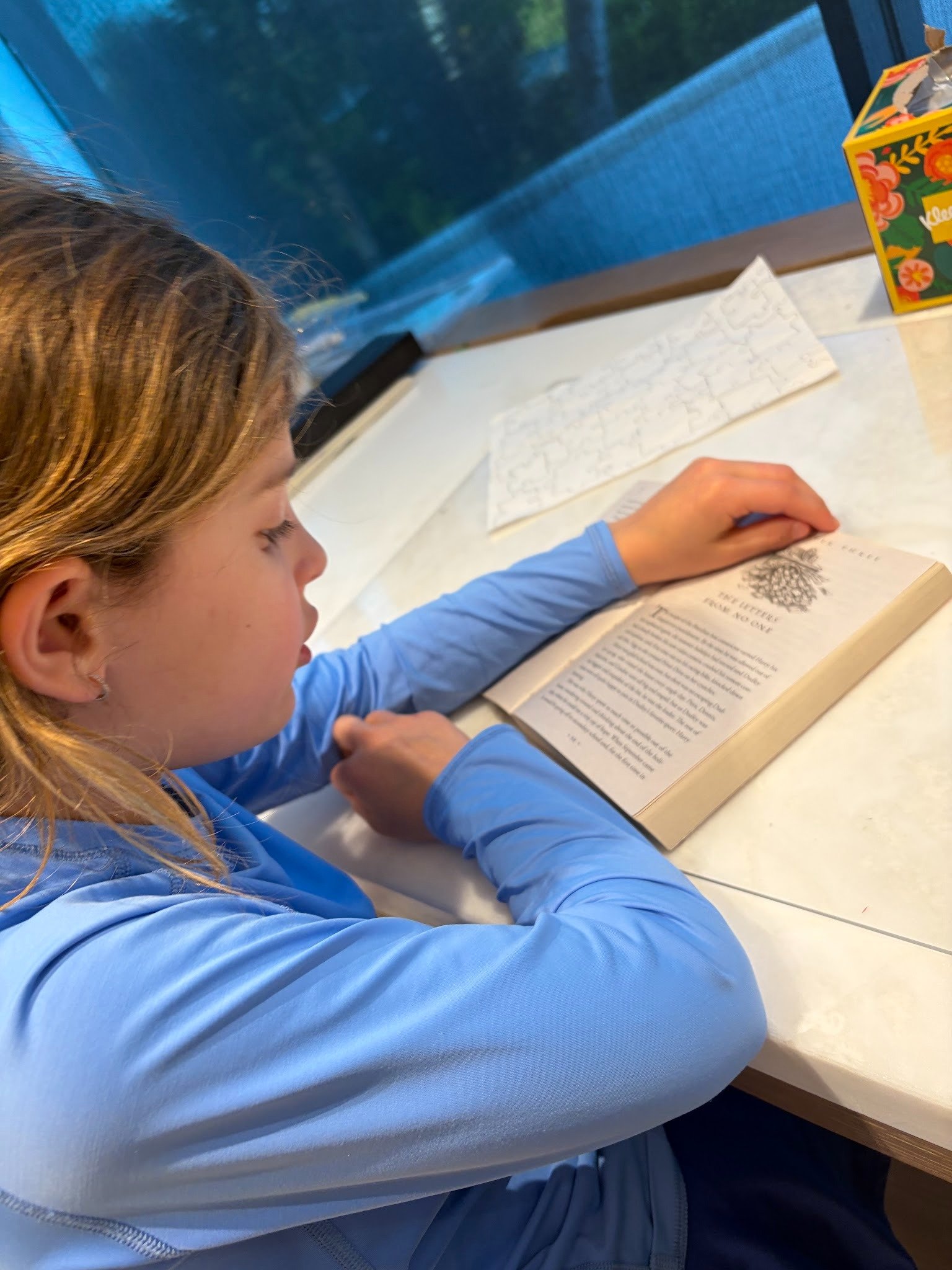
A child can name every letter of the alphabet and still not read a single word. That surprises parents who assumed the alphabet was the finish line of early reading. It is closer to the middle, because the skill that makes letters useful is one that involves no letters at all.
Reading Starts in the Ear
Before print means anything, a child has to be able to hear the separate sounds inside spoken words. This is phonemic awareness, and it is built entirely by ear: noticing that sun and fun rhyme, clapping the two beats in pencil, hearing that map begins with the /m/ sound, or blending the sounds of c, a, and t into cat without ever seeing them written. None of it uses a page. It is the groundwork that everything printed is later laid on top of. A child who cannot yet hear those sounds has nowhere to attach the letters, no matter how many letter names they have already learned.
Letters Only Click After the Sounds Do
Here is where the order matters. When a child can already hear that cat is made of three sounds, matching those sounds to the letters c, a, and t makes immediate sense, because the sounds are already there to attach to. A child who skips that step tends to memorize letter names as labels, without connecting them to the sounds they stand for. That is the child who can recite the alphabet and still cannot read, since knowing a letter’s name is not the same as knowing the sound it makes inside a word. A strong Kindergarten Reading Program in New York tends to build the sound work first and bring in letters once the ear is ready, rather than starting with print and hoping the sounds catch up.
The Sequence Cannot Be Rushed
Early reading follows an order, and each stage rests on the one before it. Skipping ahead leaves gaps that show up later as stalled reading. A common progression moves through a few stages:
- Hearing rhymes and syllables in spoken words
- Picking out the individual sounds in a word
- Matching those sounds to letters
- Blending letters into short words, then longer ones
A child who has the earlier steps solid moves through the later ones far more smoothly than one who was pushed to sound out words before the ear was ready.
Built Through Play, Not Drills
At this age the sound work has to feel like a game, since a young child will not sit through anything that does not. Songs, rhyming games, and clapping out words build phonemic awareness while a child notices only that they are playing. Programs grounded in early, phonics-first literacy tend to start with an assessment of where a child’s ear already is and build from there, so the sounds are in place before the letters arrive. That head start on the listening side is what makes the print side feel manageable later instead of forced.
The alphabet is worth learning, but it is not where reading begins. The children who read most easily are usually the ones who first learned to hear the sounds that the letters were always standing for.


CNLawBlog.com Fact-Checked: Is This Really a Legal Information Site?

SparkPressFusion.com Explained: Why This Isn’t the Real SparkPress

CamoCrypt.com Breakdown: A Crypto News Blog, Not an Encryption Tool

GadgetFreeks.com Reviewed: Useful Tech Tools, Risky Streaming Links

Charlotte Hornets vs Golden State Warriors Match Player Stats: Full Box Score and Top Performers

Pittsburgh Steelers vs Chargers Match Player Stats: Who Led the Way?

Who Is Jaisal Andrews? Inside the Life of Naveen Andrews’ Son

Who Is Saffron Le Bon? The Untold Life Story of Benjamin Compston’s Wife

Who Is Tanja Rosner? The Untold Life Story of Tate McRae’s Mother

Voozon.com Explained: What It Really Is Behind the “Knowledge Platform” Label

Who Is Sue Johnston? The Remarkable Life Story of Joel Palmentor’s Mother

Who Is Kerri Browitt Caviezel? The Inspiring Life Story of Jim Caviezel’s Wife
-
 Celebrity2 months ago
Who Is Jaisal Andrews? Inside the Life of Naveen Andrews’ Son
-
 Celebrity2 months ago
Who Is Saffron Le Bon? The Untold Life Story of Benjamin Compston’s Wife
-
 Celebrity2 months ago
Who Is Tanja Rosner? The Untold Life Story of Tate McRae’s Mother
-
 Software1 month ago
Voozon.com Explained: What It Really Is Behind the “Knowledge Platform” Label
-
 Celebrity2 months ago
Who Is Sue Johnston? The Remarkable Life Story of Joel Palmentor’s Mother
-
 Celebrity2 months ago
Who Is Kerri Browitt Caviezel? The Inspiring Life Story of Jim Caviezel’s Wife
-

 Celebrity2 months ago
Who Is Otelia Cox? The Remarkable Life Story of Tony Cox’s Wife
-

 News1 month ago
Money6x.com: What This Personal Finance Platform Offers