Business
The Dirt a Storefront Collects at Ground Level

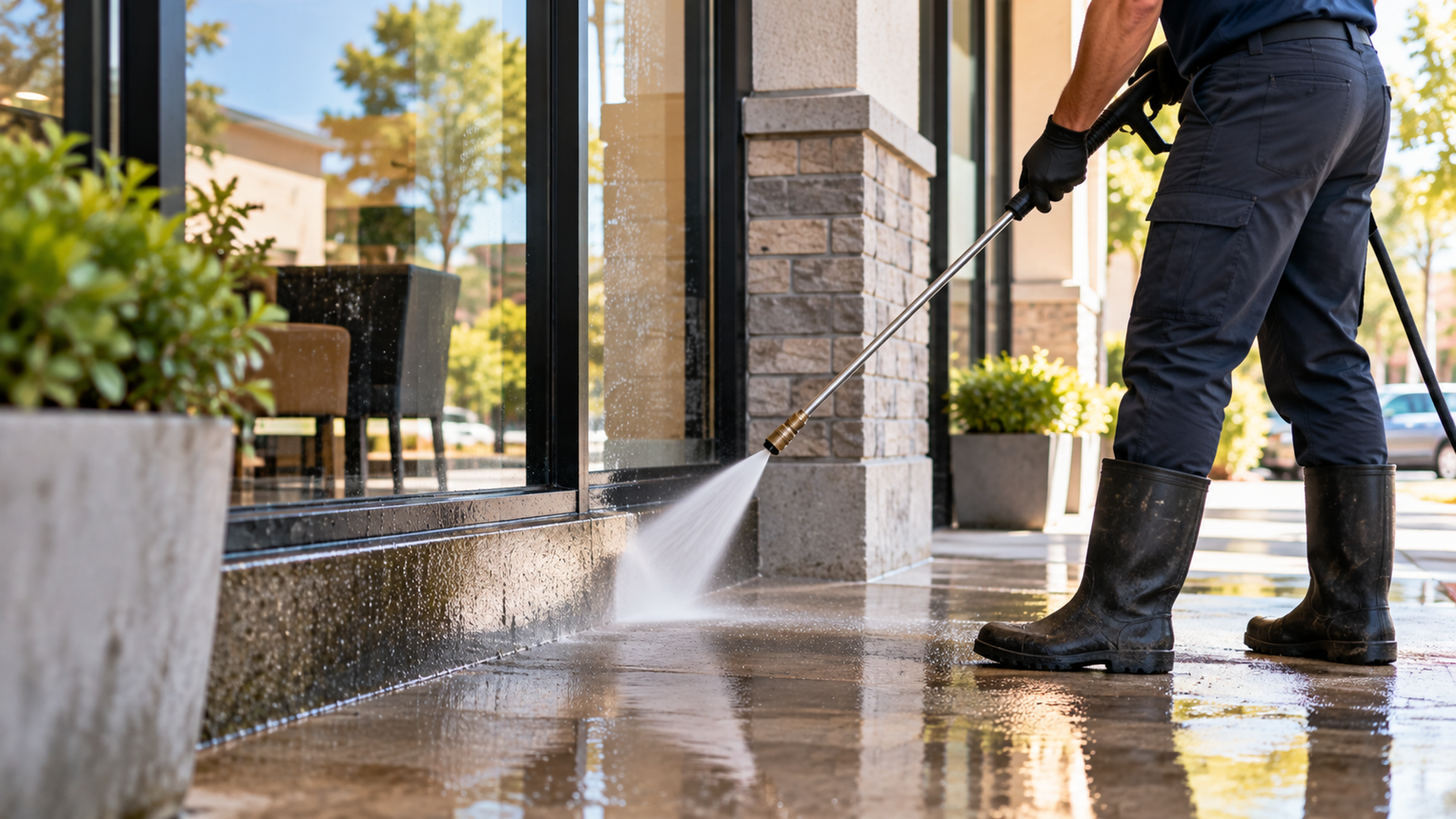
The lower few feet of any commercial building take the worst of it. Foot traffic grinds dirt into entryways, grease drips across drive-thru lanes, and algae creeps up shaded walls. The buildup arrives so gradually that owners stop seeing it, while customers notice at once. These areas also grow slick, and a wet, algae-coated walk turns into a liability. Across Orange County, regular exterior cleaning keeps a property looking cared for, not tired.
What Commercial Pressure Washing Covers
- The service reaches past a quick rinse of the front walk, covering the surfaces customers and inspectors actually judge:
- Sidewalks, entryways, and breezeways
- Parking structures, lots, and loading zones
- Building facades, awnings, and signage bases
- Dumpster pads, drive-thru lanes, and grease-stained concrete
Restaurants, retail centers, and office parks each deal with a different mix, and the right plan matches cleaning to how the space gets used.
Surfaces, Pressure, and Water Temperature
Not every surface wants the same treatment, and matching method to material prevents damage. Concrete tolerates high pressure and takes surface cleaners that leave an even finish without wand streaks. Brick, stucco, wood, and painted panels call for lower pressure and more care. Grease and oil respond to hot water far better than cold, since heat breaks the bond cold water leaves behind.
Reading the surface first and setting pressure to suit it is the part of Commercial Pressure Washing In Orange County, CA that separates a careful crew from one that points a wand at everything. The equipment behind that judgment matters too. Hot-water units cut through grease a cold stream only spreads around, surface cleaners finish flatwork more evenly than a single wand, and water-recovery systems capture runoff that would otherwise carry detergent into a storm drain. A property owner who asks about this gear early learns whether a crew tailors its approach or uses one setting across the lot.
Soft Washing Versus High-Pressure Cleaning
High pressure suits hard, durable surfaces. Soft washing relies on low pressure and specialized cleaning agents, suiting roofs, siding, and anything that would crack or strip under a strong stream. The agents handle organic growth that pressure alone only pushes around, so the result lasts longer because the cause is treated, not the symptom. The solution is chosen for the surface and surrounding greenery, since runoff reaches planters and drains. A capable provider carries both methods.
Selecting a Commercial Crew
A property manager weighing options looks past the day rate. Insurance and workers' coverage protect the site if something goes wrong. Wastewater rules apply to most commercial lots, so a crew that disposes of runoff correctly avoids fines. Scheduling matters too, since after-hours work avoids disrupting staff. A documented, recurring plan beats one-off cleanings that let grime return before anyone acts.
Pressure washing pairs naturally with window cleaning and gutter work, keeping an exterior consistent from roofline to pavement. A clean ground-level face reads as a business that runs everything else with the same care.


Flight Dispatcher Career: Why Your Airline Flight Needs Two Signatures

Best Emotional Support Animals

Who Is Lorelei Frygier? The Inspiring Journey of Kristen Bell’s Mother

Probate Lawyers in Boca Raton, FL: 5 Local Firms to Know

Is Santo Domingo Safe to Live In? The Safest Neighborhoods for Expats

7 Photoshop Alternatives for People Who Only Edit Photos Occasionally

What Is OpenSkyNews and Who Are Its Two Co-Founders?

Who Is Tanja Rosner? The Untold Life Story of Tate McRae’s Mother

Who Is Jaisal Andrews? Inside the Life of Naveen Andrews’ Son

Who Is Saffron Le Bon? The Untold Life Story of Benjamin Compston’s Wife

Who Is Kerri Browitt Caviezel? The Inspiring Life Story of Jim Caviezel’s Wife

Who Is Otelia Cox? The Remarkable Life Story of Tony Cox’s Wife
-
 Entertainment3 months ago
What Is OpenSkyNews and Who Are Its Two Co-Founders?
-
 Celebrity3 months ago
Who Is Tanja Rosner? The Untold Life Story of Tate McRae’s Mother
-
 Celebrity3 months ago
Who Is Jaisal Andrews? Inside the Life of Naveen Andrews’ Son
-
 Celebrity3 months ago
Who Is Saffron Le Bon? The Untold Life Story of Benjamin Compston’s Wife
-
 Celebrity3 months ago
Who Is Kerri Browitt Caviezel? The Inspiring Life Story of Jim Caviezel’s Wife
-
 Celebrity3 months ago
Who Is Otelia Cox? The Remarkable Life Story of Tony Cox’s Wife
-

 Celebrity3 months ago
Who Is Sue Johnston? The Remarkable Life Story of Joel Palmentor’s Mother
-

 Software2 months ago
Voozon.com Explained: What It Really Is Behind the “Knowledge Platform” Label