Artificial Intelligence
How Attractive Am I? A Guide to Exploring Your Facial Features With AI

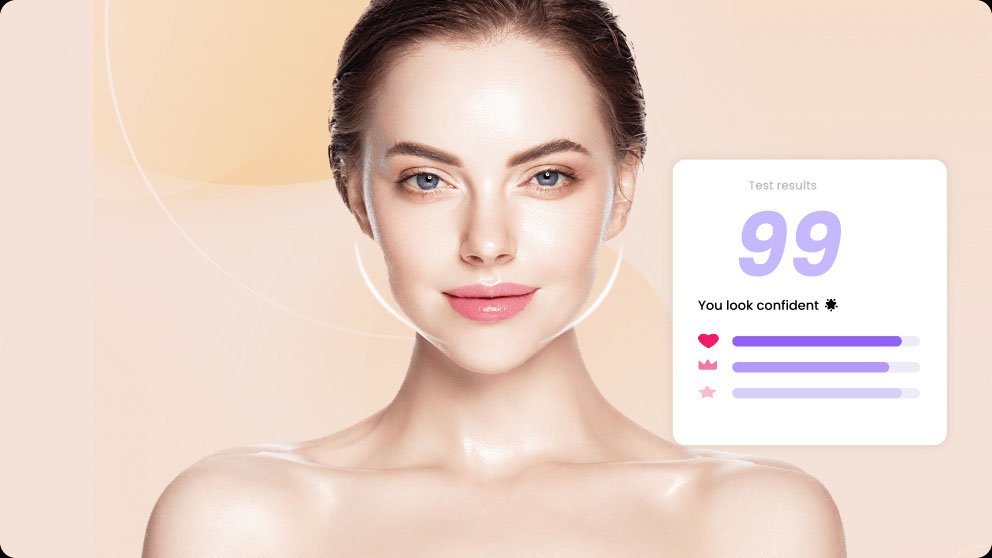
Most people have wondered, “How attractive am I?” at some point. AI attractiveness tests offer a way to explore this question by analyzing facial symmetry, proportions, and other visible characteristics. However, they cannot objectively determine someone’s attractiveness.
Whether you’re choosing a dating profile picture, updating a professional headshot, or simply curious about your appearance, understanding how AI evaluates facial features can provide useful insights.
This guide explains how AI attractiveness tests work, what influences their scores, and how to interpret the results responsibly.
How Can I Find Out How Attractive I Am?
An AI attractiveness test examines a photograph to identify visible facial characteristics and estimate how they relate to the system’s assessment criteria.
These characteristics may include facial symmetry, eye spacing, face shape, jawline definition, and overall proportions.
For a broader understanding of your appearance, Facefy’s AI face analysis provides a photo-based report that explores facial characteristics beyond a single attractiveness rating.
The important distinction is that AI can describe visible features, but beauty remains influenced by personal preferences and cultural perspectives.
How Does an AI Attractiveness Test Work?
AI beauty scanners use computer vision to examine facial characteristics and identify patterns within photographs.
Step 1: Upload a Clear Photograph
Choose a recent, front-facing photograph with even lighting and minimal distortion.
For consistent analysis:
- Keep your face fully visible.
- Position the camera near eye level.
- Avoid beauty filters and excessive editing.
- Maintain a relaxed expression.
- Keep hair away from important facial features.
A clear photograph helps the system distinguish facial characteristics from shadows or obstructions.
For anyone wondering, “How attractive am I,” Facefy offers a dedicated AI attractiveness test that analyzes facial appearance through an uploaded photograph.
It provides a practical starting point for exploring how visible facial characteristics contribute to an AI-generated assessment, without relying on strangers’ opinions.
Step 2: Analyze Facial Features
Depending on the tool, AI analysis may examine eye positioning, nose proportions, cheekbones, jawline contours, facial symmetry, and facial thirds.
These measurements help describe how individual features relate to the overall face. Some tools also assess how facial proportions sit, including whether the upper, middle, and lower thirds are balanced in height, whether interocular distance is roughly 46% of face width, whether eye-to-mouth distance is about 36% of face length, and whether the midface ratio is compact. These are measurable traits used in facial harmony analysis, not complete judgments of beauty.
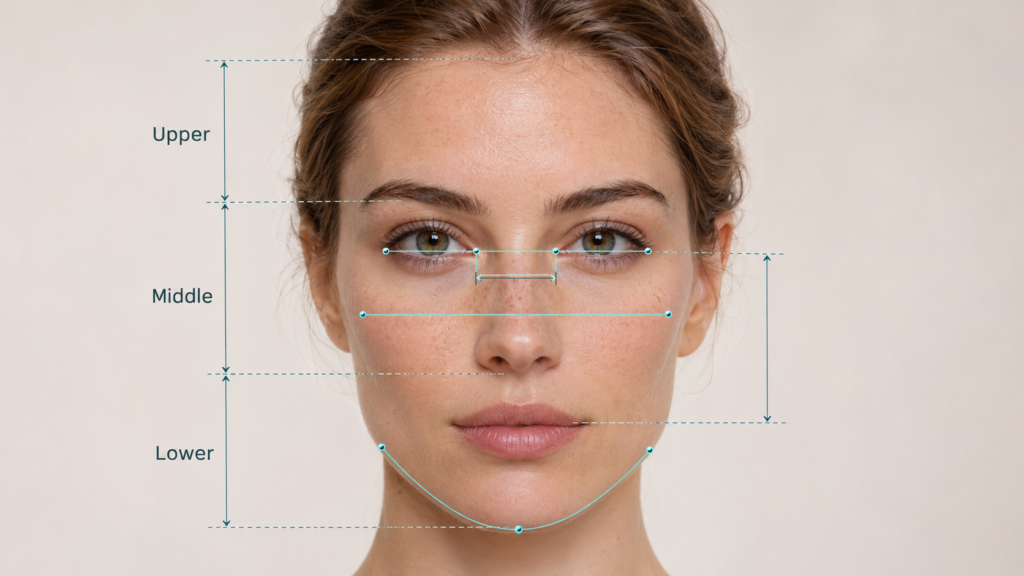
However, different platforms use different analytical methods.
Step 3: Generate an Appearance Assessment
Some attractiveness tests convert their findings into numerical scores using scales such as 1 to 10 or 0 to 100.
These numbers reflect the tool’s evaluation criteria rather than universal attractiveness standards.
Two systems may assign different ratings to the same photograph.
Step 4: Interpret the Results
A useful report provides context beyond a numerical rating, such as test answers with a feature-by-feature breakdown.
Information about face shape, symmetry, and facial proportions can help you understand your natural characteristics and overall attractiveness. Some tools also include personalized tips or practical tips alongside the score.
Treat these findings as estimates: the test measures visible geometry in that image, not your worth or complete overall attractiveness in everyday life.
What Does an Attractiveness Score Actually Mean?
An attractiveness score represents an algorithm’s interpretation of visible facial characteristics.
A score of 7 out of 10 does not establish that someone is objectively more attractive than a person receiving a 5.
There is no universally accepted numerical scale for human beauty.
Attractiveness varies according to personal preferences, cultural influences, and individual experiences.
Why Different Photos Can Produce Different Scores
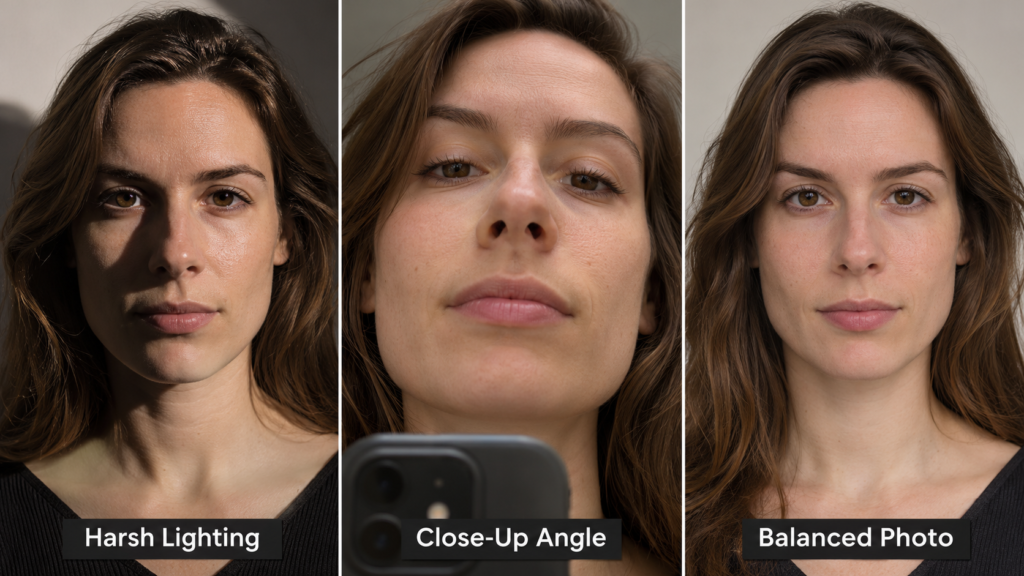
Several factors influence photo-based assessments:
- Lighting: Shadows can emphasize or soften facial contours.
- Camera angle: Different angles change apparent proportions.
- Lens distortion: Close-up selfies may exaggerate nearby features.
- Expression: Smiling changes cheek position and eye appearance.
- Hair and makeup: Styling influences how facial features are framed.
Comparing photographs taken under dramatically different conditions may reveal more about photography than actual facial characteristics.
What Facial Features Do AI Beauty Scanners Analyze?
Facial Symmetry
Facial symmetry describes similarities between the left and right sides of the face. In some face rating systems, a face symmetry test carries significant weight, with symmetry accounting for roughly 35% of the score in certain tests.
Research has explored relationships between symmetry and perceived attractiveness, and symmetrical faces are often perceived as healthier and more attractive, but symmetry alone does not determine beauty.
Natural differences in eyebrow height, eye shape, and jawline contours are common. On measurement-based tools, more symmetrical faces often score higher, but that still reflects only one aspect of facial attractiveness.
Facial Proportions and the Golden Ratio
Facial proportion analysis examines relationships between facial length, width, feature spacing, and natural proportions.
The golden ratio, approximately 1.618, sometimes appears in beauty discussions. Some beauty calculator and pretty scale test tools also quantify facial harmony with facial thirds and spacing rules, but those formulas still simplify real-world attractiveness.
However, no scientifically established golden-ratio formula objectively determines facial attractiveness.
A beauty test or pretty test focuses on geometry in a photo rather than the whole person. Facial proportions are useful descriptive measurements rather than universal beauty requirements.
Face Shape and Jawline Definition
Common face shapes include oval, round, square, heart, diamond, and oblong.
Jawline definition, cheekbone prominence, and forehead width contribute to overall facial appearance.
Many people have characteristics associated with multiple face shapes.
Eye Shape and Facial Balance
Eye spacing, eyelid structure, and canthal tilt influence facial appearance.
Canthal tilt describes the angle between the inner and outer eye corners.
Positive, neutral, and negative canthal tilts are natural variations rather than indicators of superior attractiveness.
Exploring Your Facial Features With Facefy
Understanding attractiveness involves more than focusing on one numerical score.
Facefy provides AI-powered facial analysis tools that help users explore facial proportions, symmetry, face shape, and other visible characteristics.
Rather than treating an attractiveness rating as a final judgment, Facefy encourages a broader understanding of how facial features relate to one another.
This makes it particularly useful for people interested in exploring their appearance, choosing hairstyles, or understanding facial characteristics before making styling decisions.
The results are most valuable when interpreted as informative estimates rather than fixed beauty rankings.
Can You Improve Your Attractiveness Score?
Changing lighting, styling, expression, or camera positioning may influence how AI evaluates your photograph.
However, a higher score does not necessarily indicate a meaningful change in your actual appearance.
Use More Flattering Lighting
Soft, indirect daylight generally creates more even illumination than harsh overhead lighting.
Position yourself near a window while avoiding strong shadows or excessive backlighting.
Experiment With Camera Position
Keep the camera around eye level and avoid extreme close-ups.
For facial analysis, a straightforward photograph provides a consistent reference.
For personal photographs, experiment with angles that reflect your preferred appearance.
Choose Hairstyles That Complement Your Features
Hairstyles can influence how facial proportions appear.
Side volume or fringes may visually balance an oblong face, while longer layers can create different framing effects around rounder faces.
Facefy’s Hairstyle Finder helps users explore hairstyle options based on their appearance.
Hair texture, density, maintenance, and personal preferences should guide your choices.
Focus on Grooming and Expression
Comfortable grooming habits and natural expressions can make photographs feel more representative of you.
Instead of chasing a particular AI rating, prioritize styling choices that support confidence and personal expression.
Are AI Attractiveness Tests Scientifically Accurate?
AI systems can estimate certain visible facial measurements, but measuring facial geometry differs from measuring beauty.
Research has examined symmetry, facial averageness, and proportions in relation to attractiveness judgments.
However, these findings do not establish a universal formula.
AI-generated ratings may also reflect limitations in training data, evaluation criteria, and photograph quality.
Therefore, attractiveness scores should be interpreted as model-generated estimates rather than scientifically definitive measurements.
What AI Attractiveness Tests Cannot Measure
A photograph captures only part of someone’s appearance.
It cannot fully communicate personality, humor, confidence, voice, movement, or emotional connection.
Real-world attraction also depends on familiarity, individual preferences, and social experiences.
Someone who appears reserved in photographs may be expressive and engaging during conversation.

These qualities cannot be summarized through facial measurements.
Privacy Considerations Before Uploading Your Photo
Before using an AI beauty scanner, review how the platform handles uploaded photographs.
Check whether images are stored, how long they are retained, whether they are used for model training, and what deletion options are available.
Some services offer free assessments, while others require registration or payment for additional features.
Avoid uploading photographs of other people without permission.
Frequently Asked Questions
Is There a Free AI Attractiveness Test?
Some platforms offer free appearance assessments, while others provide paid reports or additional features. Check each service’s current terms.
What Is a Good Attractiveness Score?
There is no universal threshold. Different systems use different criteria and scoring methods.
Can AI Tell Me If I’m Pretty?
AI can estimate visible facial characteristics, but it cannot objectively determine beauty.
Does Facial Symmetry Make Someone More Attractive?
Symmetry may influence attractiveness judgments, but it is only one factor among many.
Can I Get Different Scores From Different Photos?
Yes. Lighting, camera angles, expressions, and image quality can influence results.
Final Thoughts: How Attractive Am I Really?
AI attractiveness tests offer an interesting perspective on facial symmetry, proportions, and other visible characteristics.
Their greatest value comes from helping you understand your appearance rather than assigning a definitive beauty ranking.
Use clear photographs, interpret results cautiously, and remember that attractiveness extends beyond facial measurements.
Your expressions, individuality, confidence, personal style, and connections with others all contribute to how people perceive you.




Charged With Drug Possession in Fort Worth? Steps That Protect You

Who Is Emerson Normand Carville? The Inspiring Journey of James Carville’s Daughter

Who Is Jeremy Yaffe? The Untold Story of Alan Arkin’s Ex-Wife Who Became a Nurse

How Attractive Am I? A Guide to Exploring Your Facial Features With AI

How to Maximise Zero-Cent Power Hours in Australia

From Creative Ideas to Thoughtful Interiors: Designing a Home That Feels Right

What Is OpenSkyNews and Who Are Its Two Co-Founders?

Who Is Tanja Rosner? The Untold Life Story of Tate McRae’s Mother

Who Is Jaisal Andrews? Inside the Life of Naveen Andrews’ Son

Who Is Saffron Le Bon? The Untold Life Story of Benjamin Compston’s Wife

Who Is Kerri Browitt Caviezel? The Inspiring Life Story of Jim Caviezel’s Wife

Who Is Otelia Cox? The Remarkable Life Story of Tony Cox’s Wife
-
 Entertainment3 months ago
What Is OpenSkyNews and Who Are Its Two Co-Founders?
-
 Celebrity3 months ago
Who Is Tanja Rosner? The Untold Life Story of Tate McRae’s Mother
-
 Celebrity3 months ago
Who Is Jaisal Andrews? Inside the Life of Naveen Andrews’ Son
-
 Celebrity3 months ago
Who Is Saffron Le Bon? The Untold Life Story of Benjamin Compston’s Wife
-
 Celebrity3 months ago
Who Is Kerri Browitt Caviezel? The Inspiring Life Story of Jim Caviezel’s Wife
-
 Celebrity3 months ago
Who Is Otelia Cox? The Remarkable Life Story of Tony Cox’s Wife
-

 Celebrity3 months ago
Who Is Sue Johnston? The Remarkable Life Story of Joel Palmentor’s Mother
-

 Software2 months ago
Voozon.com Explained: What It Really Is Behind the “Knowledge Platform” Label