Health
Every Tilt Has a Purpose in ICF/IID Skin Care

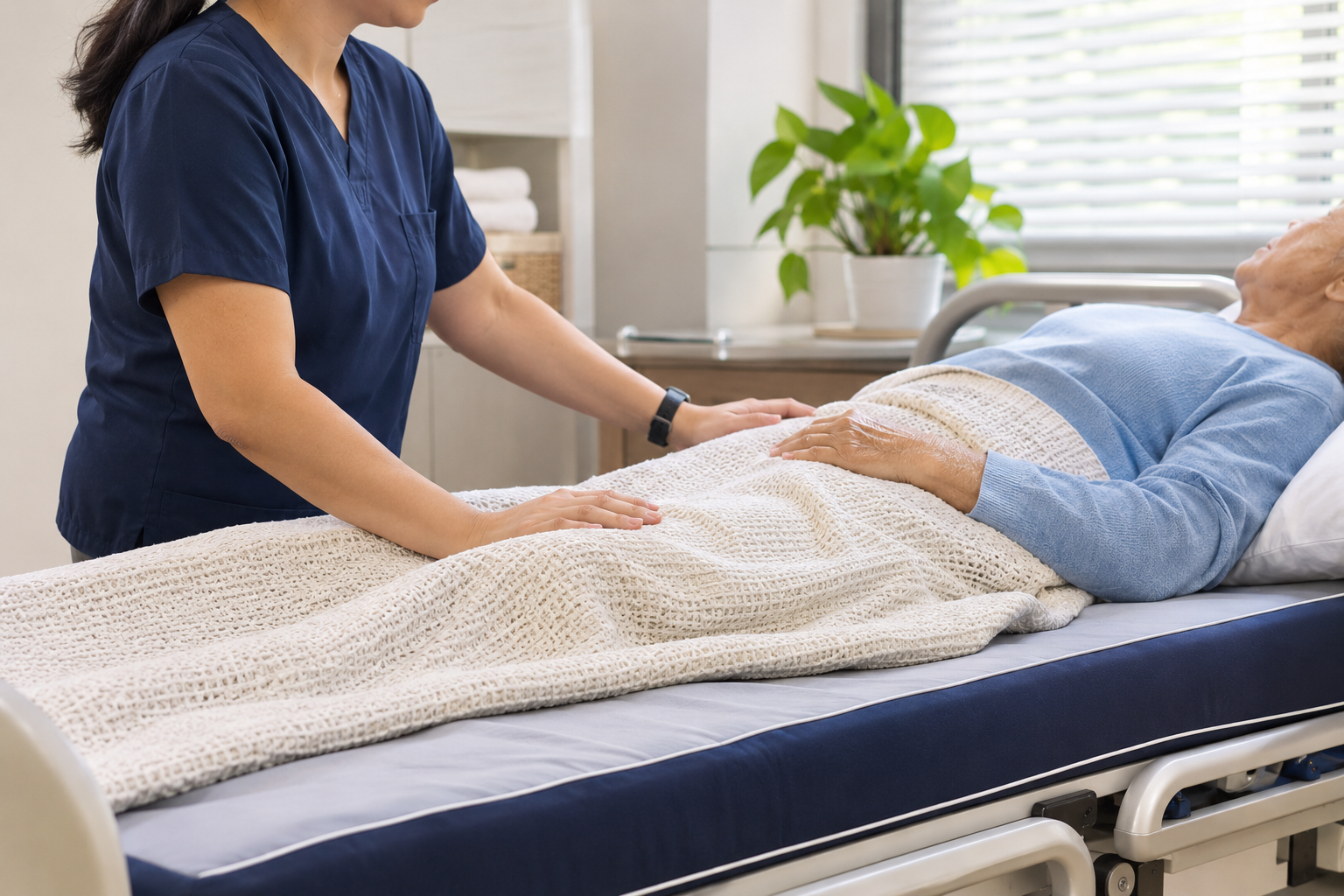
A resident who cannot move independently depends on someone else for every change in position. In ICF/IID homes, where many residents live with intellectual and developmental disabilities, those changes do more than relieve pressure. The right angle can ease breathing, reduce swelling, open access for skin care, and make daily activities possible. Understanding the purpose behind each tilt and lift helps care teams use repositioning as a therapeutic tool rather than a checklist task.
A Neutral Starting Point
Every positioning routine begins with a stable, flat surface. A neutral lying position supports assessments, general therapy, and rest between activities. The surface beneath the resident shapes skin outcomes as much as the position itself. Layered memory foam, with a firm core, a pressure-relief middle, and a gel top, spreads body weight away from the sacrum, heels, and shoulder blades. A cleanable outer cover also helps with infection control, since moisture and soiling break down fragile skin faster.
Raising the Working Height
Lifting the entire platform vertically changes the care experience for both people involved. Caregivers no longer bend over low beds or mats to clean, dress, or inspect skin, which lowers the risk of back strain. Staff who are not worn down by lifting can keep turning schedules consistent, a central piece of Wound Care Prevention for Intermediate Care Facilities (ICF/IID) in homes with many immobile residents. Residents gain eye-level contact with the people around them, and that small shift makes meals, medication, and conversation feel more personal. For individuals who rely on nonverbal cues, seeing faces clearly supports engagement and trust.
Head-to-Toe Angling for Circulation
Tilting the body along its length serves two different goals. Raising the chest can support respiratory therapy and safer feeding for residents prone to aspiration. Reversing the angle lifts the legs above the heart, which encourages venous return and can ease swelling in the lower body and sacral area. Better circulation keeps tissue healthier and more resistant to breakdown. Swollen tissue is more fragile and easily damaged, so managing fluid buildup is part of prevention rather than a separate concern.
Lateral Tilt and Pressure Relief
Rotating a resident to the right or left shifts weight off the back and hips, the areas where pressure ulcers most often begin. A motorized tilt accomplishes this smoothly, without the pulling and sliding that cause friction and shear during manual turns. The same tilt opens access for wound checks, hygiene, and dressing changes. Over time, gentle lateral movement can also support trunk control and weight-shifting practice during therapy sessions. Detachable safety straps keep residents secure throughout, and designs that accommodate G-tubes and IV lines prevent medical equipment from limiting the routine.
When care teams rotate through each position with intention, residents receive steady pressure relief, better circulation, and more comfortable days, while staff avoid the physical toll of manual handling.


Who Is Dorothée Lepère? The Remarkable Life of François-Henri Pinault’s First Wife

Skin and Scale, Sorted: A Medical Approach to Feeling Like Yourself Before the New Year

Plant It Like a Pro: Arborist Tips for Getting Evergreens Through Their First Winter

Fall Tune-Up for Indoor Pool Dehumidifiers: What to Inspect Before Heating Season

Before the Holiday Proposal: An 8-Week Guide to Finding the Right Engagement Ring

Who Is Zoe Giordano Harrelson? The Remarkable Life of Woody Harrelson’s Daughter

What Is OpenSkyNews and Who Are Its Two Co-Founders?

Who Is Tanja Rosner? The Untold Life Story of Tate McRae’s Mother

Who Is Jaisal Andrews? Inside the Life of Naveen Andrews’ Son

Who Is Saffron Le Bon? The Untold Life Story of Benjamin Compston’s Wife

Who Is Kerri Browitt Caviezel? The Inspiring Life Story of Jim Caviezel’s Wife

Who Is Otelia Cox? The Remarkable Life Story of Tony Cox’s Wife
-
 Entertainment3 months ago
What Is OpenSkyNews and Who Are Its Two Co-Founders?
-
 Celebrity3 months ago
Who Is Tanja Rosner? The Untold Life Story of Tate McRae’s Mother
-
 Celebrity3 months ago
Who Is Jaisal Andrews? Inside the Life of Naveen Andrews’ Son
-
 Celebrity3 months ago
Who Is Saffron Le Bon? The Untold Life Story of Benjamin Compston’s Wife
-
 Celebrity3 months ago
Who Is Kerri Browitt Caviezel? The Inspiring Life Story of Jim Caviezel’s Wife
-
 Celebrity3 months ago
Who Is Otelia Cox? The Remarkable Life Story of Tony Cox’s Wife
-

 Celebrity3 months ago
Who Is Sue Johnston? The Remarkable Life Story of Joel Palmentor’s Mother
-

 Software2 months ago
Voozon.com Explained: What It Really Is Behind the “Knowledge Platform” Label