Blog
Foreign Material Data From Food Processing Equipment

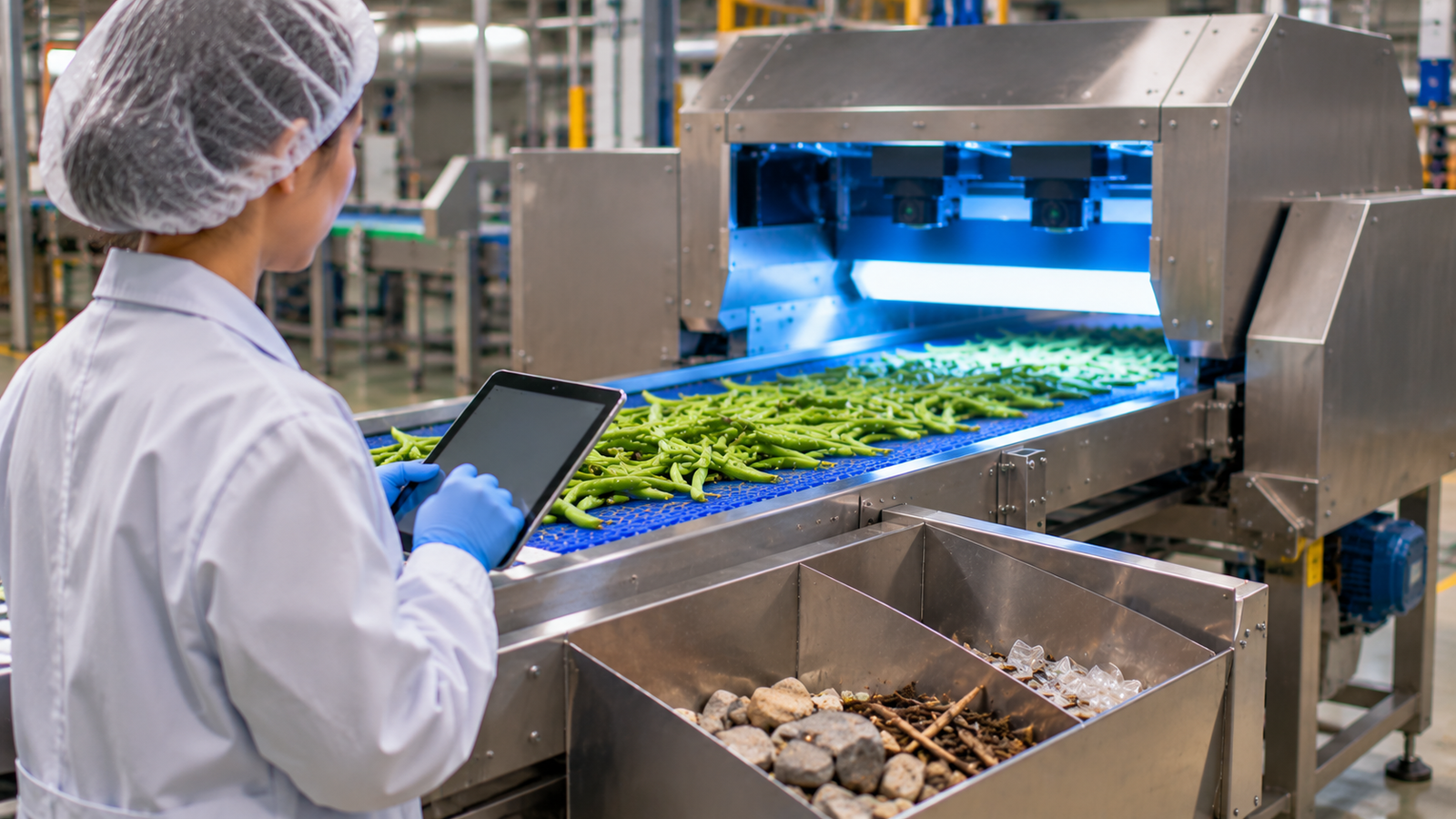
A single stone, shard of plastic, or piece of wood in a finished pack can trigger complaints, lost contracts, or a recall. Optical sorters remove much of that risk at line speed, and the data they generate now offers a second layer of protection by showing where contamination comes from and which types appear most often.
Foreign Material Is a Moving Target
Contamination changes with the crop, the field, the weather, and the harvest method. Stones and clods may spike after a wet harvest, while sticks, shells, or stray plastic can rise with certain suppliers. Inside the plant, worn belts, broken scrapers, or damaged packaging can add their own debris. Modern sorters combine cameras and lasers to recognize differences in color, structure, and shape, which helps them catch materials that look similar to good product. Because the mix changes so often, a sorter that is perfectly tuned in one month may need adjustment the next.
Turning Detections Into a Record
Every rejection is also a data point. Connected sorters can log the type of material detected, the time, the line, and the lot being processed. Quality teams can use that log to support food safety plans, answer customer audit questions with real numbers, and show that controls are working as intended. When a complaint does arrive, records tied to a production window make it easier to investigate quickly and narrow the scope of any response.
Finding Risk Before the Sorter
For processors weighing Data Analytics Software for Food Processing Equipment, upstream insight is often where the value grows fastest. A spike in rocks from one grower's deliveries can prompt a conversation about field practices or harvest equipment. A steady rise in plastic fragments may point to a worn component on a conveyor or cutter before it fails completely. Identifying those sources reduces the load on the sorter and lowers the chance that something slips through. Over time, sharing these findings with growers turns sorting data into a tool for improving raw material.
Tuning Without Sacrificing Yield
Sorting more aggressively removes more foreign material, but it can also throw away good product. Data helps teams find the right setting rather than guessing. Common practices include:
- Comparing reject samples against good product to measure false rejects
- Running known test pieces regularly to verify detection performance
- Saving separate sorting settings for different crops, varieties, or seasons
- Reviewing results with operators so adjustments follow evidence
Some lines also add a second sorting stage that re-inspects the reject stream, recovering good product without loosening food safety standards.
Foreign material control has always depended on sharp inspection. With connected sorting equipment and careful analysis, processors can see patterns behind each rejection, act on root causes, and protect both safety and yield across the entire line.


Who Is Dorothée Lepère? The Remarkable Life of François-Henri Pinault’s First Wife

Skin and Scale, Sorted: A Medical Approach to Feeling Like Yourself Before the New Year

Plant It Like a Pro: Arborist Tips for Getting Evergreens Through Their First Winter

Fall Tune-Up for Indoor Pool Dehumidifiers: What to Inspect Before Heating Season

Before the Holiday Proposal: An 8-Week Guide to Finding the Right Engagement Ring

Who Is Zoe Giordano Harrelson? The Remarkable Life of Woody Harrelson’s Daughter

What Is OpenSkyNews and Who Are Its Two Co-Founders?

Who Is Tanja Rosner? The Untold Life Story of Tate McRae’s Mother

Who Is Jaisal Andrews? Inside the Life of Naveen Andrews’ Son

Who Is Saffron Le Bon? The Untold Life Story of Benjamin Compston’s Wife

Who Is Kerri Browitt Caviezel? The Inspiring Life Story of Jim Caviezel’s Wife

Who Is Otelia Cox? The Remarkable Life Story of Tony Cox’s Wife
-
 Entertainment3 months ago
What Is OpenSkyNews and Who Are Its Two Co-Founders?
-
 Celebrity3 months ago
Who Is Tanja Rosner? The Untold Life Story of Tate McRae’s Mother
-
 Celebrity3 months ago
Who Is Jaisal Andrews? Inside the Life of Naveen Andrews’ Son
-
 Celebrity3 months ago
Who Is Saffron Le Bon? The Untold Life Story of Benjamin Compston’s Wife
-
 Celebrity3 months ago
Who Is Kerri Browitt Caviezel? The Inspiring Life Story of Jim Caviezel’s Wife
-
 Celebrity3 months ago
Who Is Otelia Cox? The Remarkable Life Story of Tony Cox’s Wife
-

 Celebrity3 months ago
Who Is Sue Johnston? The Remarkable Life Story of Joel Palmentor’s Mother
-

 Software2 months ago
Voozon.com Explained: What It Really Is Behind the “Knowledge Platform” Label