Business
5G Connectivity: How the Next Generation of Mobile Networks Is Changing Technology

Introduction
Mobile connectivity has become an important part of modern life. People use smartphones to communicate, watch videos, attend online meetings, shop, learn, and manage their daily activities. Businesses also depend on reliable internet connections to serve customers and operate digital systems.
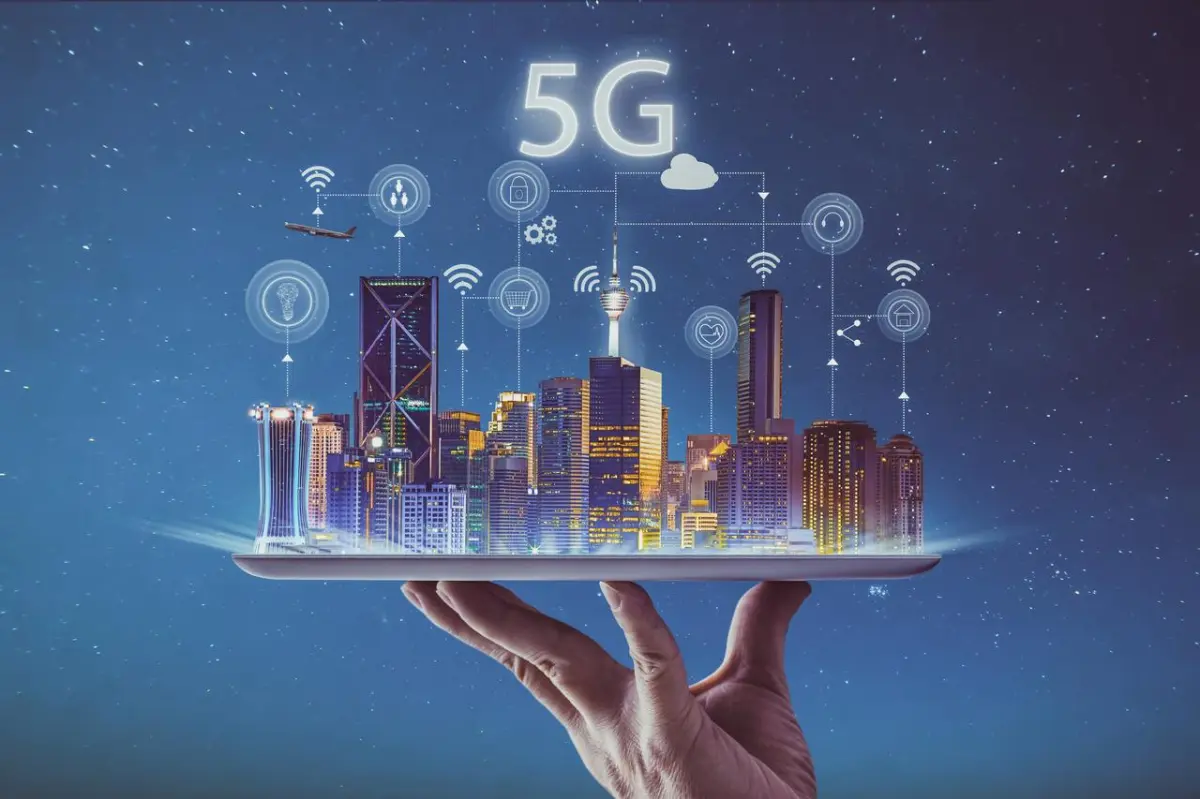
The development of 5G technology has created new opportunities for mobile communication. It is the fifth generation of mobile network technology, designed to support higher data speeds, responsive connections, and more connected devices under suitable conditions.
5G is not simply about downloading files faster. It can also support technologies such as connected vehicles, smart factories, remote monitoring, and Internet of Things devices.
However, the benefits of 5G depend on network coverage, available spectrum, device compatibility, and the services offered by mobile operators. Understanding how the technology works can help consumers and businesses make better decisions.
What Is 5G Technology?
5G stands for fifth-generation mobile network technology. It follows earlier generations of mobile communication, including 3G and 4G.
Each generation has introduced improvements in how mobile devices connect to networks. Earlier networks helped expand mobile internet access, while 4G made high-quality video streaming, mobile applications, and other data-intensive services more practical.
5G was developed to support higher capacity, faster data transmission, lower latency in suitable conditions, and large numbers of connected devices.
The technology uses radio signals to transfer information between mobile devices and network equipment. From there, the information travels through the operator’s network to the relevant online service.
A 5G connection does not guarantee the same performance everywhere. Actual speeds and responsiveness depend on signal strength, network congestion, spectrum, device design, and the operator’s infrastructure.
How Does 5G Work?
5G networks combine radio technology, antennas, base stations, fiber connections, software, and core network systems.
When a smartphone connects to a 5G network, it communicates with nearby cellular equipment. The network manages the connection and directs data toward the correct destination.
Several technologies help 5G deliver its capabilities.
Radio Spectrum
Radio spectrum is the range of electromagnetic frequencies used to carry wireless signals. Mobile operators use licensed spectrum bands to provide cellular services.
Different frequency ranges have different strengths.
Low-band spectrum can cover large areas and provide useful indoor coverage. Mid-band spectrum often offers a balance between coverage and capacity. High-band spectrum can provide very high capacity over shorter distances, but its signals are more easily affected by obstacles.
Operators choose their network design according to local conditions, available spectrum, cost, and customer demand.
Small Cells and Base Stations
Cellular networks use base stations to connect devices to the wider network. Some 5G deployments also use smaller cells to provide capacity in busy locations.
Small cells can be useful in shopping districts, transport hubs, stadiums, and other places where many people use mobile data.
They do not replace every traditional cell tower. Instead, they can work alongside larger sites to improve capacity where needed.
Massive MIMO
Multiple-input multiple-output technology uses multiple antennas to transmit and receive signals. Advanced antenna systems can help networks serve more users and use radio resources efficiently.
Massive MIMO uses larger antenna arrays and can support beamforming techniques.
Beamforming helps direct radio energy toward intended devices instead of spreading it equally in every direction. Performance still depends on the environment and network configuration.
Network Software
Modern mobile networks use software to manage connections, allocate resources, and support different service requirements.
Some 5G systems support network slicing, which allows an operator to configure logically separated network environments for different needs.
For example, a service designed for industrial equipment may have different performance requirements from ordinary smartphone browsing. Network slicing depends on the operator’s architecture and service offerings.
For more technology news, digital trends, and informative articles, visit sosoactivehub.org.
Key Benefits of 5G
5G offers several potential advantages, although results vary between networks and locations.
1. Faster Data Speeds
5G can deliver faster downloads and uploads than older mobile networks under suitable conditions.
This can make it easier to download large files, stream high-quality video, and transfer data between devices.
However, not every 5G connection is faster than every 4G connection. A strong 4G signal may outperform a weak or congested 5G connection.
2. Lower Latency
Latency is the time information takes to travel between devices and systems. Lower latency can help applications respond more quickly.
This is important for interactive gaming, industrial control, remote monitoring, and other applications where delays matter.
The latency experienced by users depends on more than the radio connection. Server distance, internet routing, application design, and network congestion can also affect responsiveness.
3. Greater Network Capacity
Busy locations can place heavy demands on mobile networks. 5G technologies can improve capacity and help operators serve more devices in suitable conditions.
This can be valuable at concerts, sports events, shopping centers, and crowded urban areas.
Actual performance still depends on how much spectrum and infrastructure an operator has deployed.
4. Support for Connected Devices
5G is designed to support a broad range of connected devices. These may include sensors, smart meters, industrial equipment, and tracking systems.
Not every connected device needs high speed. Some devices send only small amounts of information and require long battery life.
The right connection technology depends on the application’s needs, cost, coverage, and power requirements.
5. Better Support for New Digital Services
More responsive connections and increased capacity can help businesses develop services that depend on frequent data exchange.
Examples include connected manufacturing equipment, cloud-based applications, and some forms of remote assistance.
The network is only one part of the solution. Devices, software, security, and reliable infrastructure are also necessary.
5G vs. 4G: What Is the Difference?
Both 4G and 5G provide mobile internet access, but they differ in their technical capabilities and design goals.
| Feature | 4G | 5G |
| Network generation | Fourth generation | Fifth generation |
| Data performance | Suitable for many everyday tasks | Can offer higher speeds under suitable conditions |
| Latency | Often suitable for normal mobile applications | Can provide lower latency in suitable deployments |
| Device support | Supports smartphones and many connected devices | Designed to support smartphones and broader connected-device needs |
| Coverage | Widely established in many regions | Varies according to local deployment |
| Main uses | Browsing, video, messaging, applications | Existing mobile uses plus additional capacity and specialized applications |
For everyday browsing, messaging, and social media, 4G may already be sufficient. Users who need greater capacity or access to specific 5G services may benefit from a 5G-compatible device and suitable network coverage.
How 5G Can Improve Daily Life
5G can support many familiar digital activities while enabling new applications.
Video Streaming
Faster connections can help users stream high-quality video and download content more quickly when the network has sufficient capacity.
The viewing experience also depends on the streaming service, device, data plan, and signal quality.
Online Gaming
Online games rely on stable connections and responsive servers. A suitable 5G connection may improve performance for some players, especially where older networks are congested.
However, 5G cannot eliminate every delay. The game’s server location and the player’s device also influence responsiveness.
Video Calls and Remote Work
Reliable mobile connectivity helps employees attend meetings, share documents, and access cloud applications while away from the office.
5G can be useful where fixed broadband is unavailable or where workers need a mobile connection. Stable coverage remains more important than the network label alone.
Mobile Learning
Students can use mobile connections to attend online classes, watch lessons, and download study materials.
Better mobile capacity can help in areas where many learners depend on cellular networks. Affordable data plans and suitable devices remain essential for access.
5G in Business and Industry
Businesses can use 5G in ways that go beyond ordinary smartphone access.
Smart Manufacturing
Factories may connect sensors, inspection systems, mobile robots, and production equipment to communication networks.
5G can support data exchange between devices and management systems. In some settings, it can offer an alternative or complement to wired connections.
Industrial applications still need carefully designed safety systems. Critical equipment should not rely on an untested wireless connection for essential safety functions.
Healthcare Technology
Healthcare providers can use connected devices to transfer information and support remote monitoring.
5G may help transmit large amounts of data from suitable medical equipment. However, healthcare applications require strong privacy protections, reliable systems, and appropriate professional oversight.
A mobile network alone does not make a medical procedure safe or guarantee a successful outcome.
Smart Cities
Cities may use connected sensors to monitor traffic, street lighting, air quality, and public infrastructure.
5G can provide connectivity for certain deployments, especially where capacity or responsiveness is important.
A successful smart-city project also needs clear goals, suitable maintenance, public accountability, and protection for residents’ information.
Logistics and Transportation
Transport companies can use connected systems to track vehicles, monitor equipment, and exchange operational information.
5G may help support more data-intensive services in suitable areas. Coverage gaps, network reliability, and cybersecurity must be considered before deployment.
The Role of 5G in the Internet of Things
The Internet of Things, or IoT, refers to physical devices that collect or exchange data through networks.
Examples include industrial sensors, smart meters, tracking devices, and connected building equipment.
5G can support some IoT applications that need higher capacity or responsive communication. Other devices may use technologies such as Wi-Fi, Bluetooth, or low-power wide-area networks.
For example, a factory may use 5G to connect mobile equipment while a small temperature sensor uses a low-power connection.
Choosing the right technology depends on data volume, battery life, coverage, reliability, and total cost.
Challenges of 5G Deployment
Although 5G offers important opportunities, expanding the technology requires investment and careful planning.
Infrastructure Costs
Mobile operators may need new antennas, upgraded equipment, fiber connections, and additional sites.
High-capacity deployments in busy areas can require substantial investment. These costs may affect how quickly networks expand into different communities.
Uneven Coverage
5G availability differs between countries, cities, towns, and rural regions. Some places have strong coverage, while others have limited access.
Users should check local coverage maps and test service quality before purchasing a device or changing a mobile plan.
Device Compatibility
A smartphone must support the relevant 5G bands used by the local operator. A device advertised as 5G-compatible may not support every band’s configuration in every country.
Consumers should verify compatibility with their specific network.
Battery Use
Network conditions, device design, and the way a phone uses 5G can affect battery life.
A weak signal may cause a device to use more power while maintaining its connection. Results vary, so it is not accurate to say that every 5G phone always uses more battery than a 4G phone.
Security and Privacy
Connected networks increase the importance of secure devices, software updates, access controls, and network monitoring.
Businesses should understand what information their devices collect and who can access it. Manufacturers and operators also have responsibilities for maintaining secure systems.
Is 5G Safe?
5G uses radiofrequency electromagnetic fields to transmit information. These are non-ionizing forms of radiation, unlike X-rays, which have enough energy to ionize atoms.
Radiofrequency exposure is subject to safety standards and regulatory limits. Questions about safety should be assessed using reliable scientific evidence and guidance from relevant public health and telecommunications authorities.
Consumers should avoid treating unsupported social media claims as proof of harm. They can consult recognized health agencies and national regulators for current guidance on exposure limits and compliance.
How to Get the Best 5G Experience
Users can take several practical steps to improve their mobile connection.
- Check local coverage: Confirm that the operator offers 5G in the places where you spend time.
- Verify phone compatibility: Make sure your device supports the network bands used by your operator.
- Choose a suitable data plan: Check speed limits, data allowances, and any fair-use policies.
- Keep software updated: Install supported updates to improve compatibility and security.
- Compare real performance: Test service at home, at work, and during travel if possible.
- Consider alternatives: A reliable Wi-Fi or fixed broadband connection may be more suitable for some locations.
These steps help users make decisions based on actual needs instead of marketing claims.
The Future of 5G Connectivity
5G networks will continue to evolve as operators expand coverage, improve equipment, and introduce additional services.
Businesses may develop more connected industrial systems, while consumers gain access to improved mobile services in well-served areas. Network software and edge computing may also help certain applications process data closer to where it is generated.
Research into future mobile generations is also continuing. However, the arrival of a new generation does not make every existing network or device immediately obsolete.
The long-term impact of 5G will depend on affordable access, practical applications, reliable infrastructure, and responsible management of connected systems SosoActiveHub.
Conclusion
5G is an important development in mobile communication. It can provide higher speeds, improved capacity, and lower latency under suitable conditions. These capabilities can support smartphones, connected devices, smart factories, healthcare technology, and other digital services.
However, the quality of a 5G connection depends on coverage, spectrum, network congestion, device compatibility, and operator investment.
Consumers should compare real-world performance before choosing a plan, while businesses should evaluate security, reliability, and costs before adopting 5G-based systems.
As networks develop, 5G can help create new digital opportunities when it is combined with useful applications, reliable infrastructure, and responsible technology practices.


When Water Gets In: First 48 Hour Decisions That Save Walls, Floors, and Sanity

Reroof or Tear Off? Wet Climate Decisions That Make a New Roof Last in Seattle

The Role of Field of View in Camera Installation Planning

What Is Unbanned G+ and How Do People Use It Today?

5G Connectivity: How the Next Generation of Mobile Networks Is Changing Technology

Barapk Org Review 2026: Features, Risks, and Alternatives

Who Is Jaisal Andrews? Inside the Life of Naveen Andrews’ Son

Who Is Tanja Rosner? The Untold Life Story of Tate McRae’s Mother

Who Is Saffron Le Bon? The Untold Life Story of Benjamin Compston’s Wife

Who Is Sue Johnston? The Remarkable Life Story of Joel Palmentor’s Mother

Voozon.com Explained: What It Really Is Behind the “Knowledge Platform” Label

Who Is Kerri Browitt Caviezel? The Inspiring Life Story of Jim Caviezel’s Wife
-
 Celebrity2 months ago
Who Is Jaisal Andrews? Inside the Life of Naveen Andrews’ Son
-
 Celebrity2 months ago
Who Is Tanja Rosner? The Untold Life Story of Tate McRae’s Mother
-
 Celebrity2 months ago
Who Is Saffron Le Bon? The Untold Life Story of Benjamin Compston’s Wife
-
 Celebrity2 months ago
Who Is Sue Johnston? The Remarkable Life Story of Joel Palmentor’s Mother
-
 Software1 month ago
Voozon.com Explained: What It Really Is Behind the “Knowledge Platform” Label
-
 Celebrity2 months ago
Who Is Kerri Browitt Caviezel? The Inspiring Life Story of Jim Caviezel’s Wife
-

 Celebrity2 months ago
Who Is Otelia Cox? The Remarkable Life Story of Tony Cox’s Wife
-

 News2 months ago
Money6x.com: What This Personal Finance Platform Offers