Business
When Water Gets In: First 48 Hour Decisions That Save Walls, Floors, and Sanity

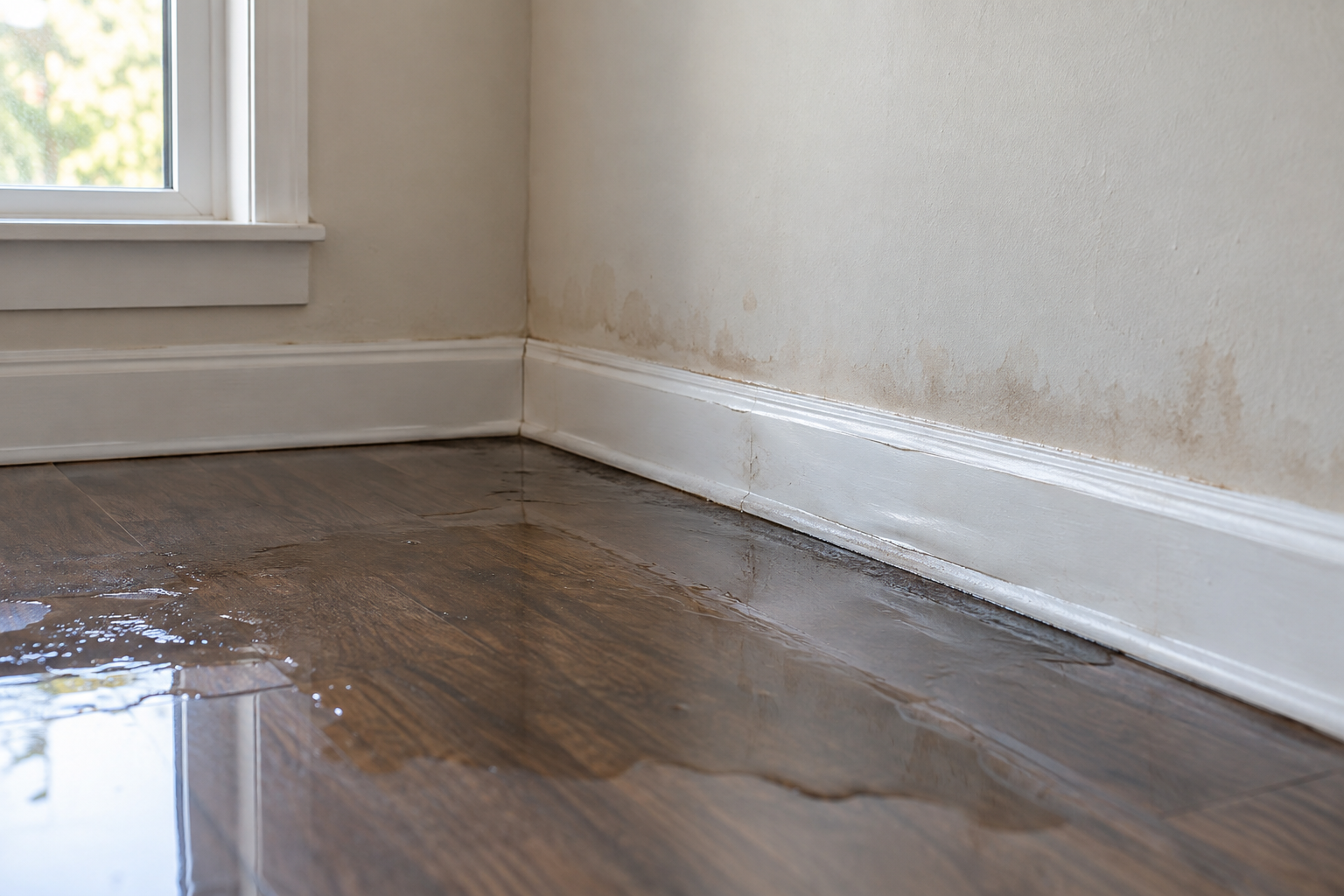
Indoor water damage moves fast. Within hours, drywall wicks moisture, carpet pads act like sponges, and hidden cavities behind baseboards stay wet even when surfaces feel dry. The first two days set the trajectory for everything that follows: whether you can dry in place, where you need clean cuts, and how long equipment must run. This article focuses on concrete, early decisions that limit secondary damage and make later repairs more predictable. You will learn how to shut down the source safely, map where moisture actually traveled, choose what to remove versus dry, set up drying that works, handle contaminated water differently, and verify dryness before rebuilding so you do not trap moisture behind new finishes.
- Shut off the water, make the area safe, and map moisture paths.
Start by closing the nearest shutoff valve or the main, then switch off power at the breaker to wet rooms and any circuits serving a soaked ceiling. In older multifamily buildings in Chicago, a garden-level leak can track under sill plates, into plaster on lath, and behind paneling before it shows. Use a noninvasive moisture meter to trace wet edges beyond visible staining, and lift the first course of vinyl tiles or laminate planks to check the underlayment. Photograph cabinets, baseboards, and door jambs where swelling or delamination begins so you can compare later.
Do not assume water stayed on the floor. Open vanity toe kicks, pop a few baseboard nails, and look behind trim for soaked paper backing. An infrared camera can quickly highlight cold, evaporating areas along studs, but confirm with a pin or pinless meter to avoid being fooled by shadows. If a bathroom overflowed, inspect the ceiling of the room below, especially around can lights and HVAC registers where water can pool in cavities before dripping.
- Choose what to remove versus dry based on material and contamination.
Materials drive the decision. Standard drywall swells and loses strength when saturated; cutting a straight line at 12 to 24 inches above the highest wet reading exposes the stud bay so insulation can be pulled. Fiberglass batts and blown-in cellulose don’t dry well once soaked in wall cavities, so removal is typically faster and safer than trying to force them to dry. Leaving baseboards in place traps moisture at the bottom plate and slows everything down; prying them carefully allows air movers to flush the channel where wicking is strongest.
Flooring choices also matter. Carpet can sometimes be floated and dried, but the pad underneath usually holds odor and should be replaced. Solid hardwood may be saved with panel drying and dehumidification if cupping is mild and caught early; engineered planks with swollen HDF cores rarely recover. A typical upstairs tub overflow that wets a kitchen ceiling suggests removing wet ceiling drywall around the light fixtures and checking the back of cabinets for swelling. Particleboard toe kicks and melamine backs often s, so discard them to avoid hidden pockets of moisture and odor.
- Set up drying that actually lowers humidity, not just moves air.
Fans alone do not dry structures; they only speed evaporation. Without a dehumidifier pulling water from the air, humidity climbs, condensation forms on cool surfaces, and drying stalls. Use a high-capacity dehumidifier centrally, and route warm, dry air across wet surfaces with air movers at a 45-degree angle to avoid splashing. Close windows to create a controlled environment unless the outside air is measurably drier, and keep doors to unaffected rooms closed to limit moisture migration and noise.
Direct airflow into opened stud bays and under cabinets where you removed toe kicks. A temporary plastic vapor barrier can help focus dry air into a cavity, while leaving a return path for moisture-laden air back to the dehumidifier. Track progress with both a hygrometer and a moisture meter. Relative humidity should trend downward while surface moisture readings drop day over day. Reposition air movers as readings even out; blasting now, drying now, drywall while a damp subfloor lingers wastes time and electricity.
- Treat sewage and dishwasher backups as contaminated water.
Water that comes through a floor drain, toilet, or failed dishwasher discharge isn’t just dirty; it can carry contaminants that change the playbook. Wear gloves, boots, and a suitable respirator, and isolate the work area with plastic sheeting to prevent cross-contamination into hallways or beds. Hard, nonporous surfaces like concrete and ceramic tile can be cleaned with a detergent and a disinfectant labeled for that surface after gross debris is removed.
Consider a basement scenario where a storm overwhelms a floor drain, and water spreads into a laundry room and family. Pump and wet-vac out standing water, then shovel away any silt before washing. Run a HEPA air scrubber during demolition to capture aerosolized particles when cutting drywall or pulling tack strips. Keep children and pets out of the work zone, and avoid using household bleach on porous building materials; it does not penetrate well and can create irritating fumes in tight spaces.
Verify dryness before closing walls or reinstalling flooring.
Rebuilding too soon is a common, costly mistake. A painted wall can feel dry while studs or the bottom plate remain above their normal moisture content. Use a baseline from an unaffected room to set your target, then check each cavity at several heights before insulating. Subfloors should read at or near the baseline before new hardwood or luxury vinyl is installed, or trapped moisture may cause cupping, adhesive failure, or recurring odor. Document readings with dates and locations so you can defend decisions if questions arise later.
Two days of careful choices often determine weeks of recovery. Shut down the source and hazards quickly, follow moisture rather than appearances, remove what will not reasonably dry, and run dehumidifiers and air movers as a team, not in isolation. Treat contaminated intrusions with containment and disposal instead of wishful cleaning. Finally, verify dryness with instruments before you rebuild. These steps reduce the chance of mold growth behind new finishes, minimize demolition, and help your home return to a stable, healthy condition without tear-outs.


When Water Gets In: First 48 Hour Decisions That Save Walls, Floors, and Sanity

Reroof or Tear Off? Wet Climate Decisions That Make a New Roof Last in Seattle

The Role of Field of View in Camera Installation Planning

What Is Unbanned G+ and How Do People Use It Today?

5G Connectivity: How the Next Generation of Mobile Networks Is Changing Technology

Barapk Org Review 2026: Features, Risks, and Alternatives

Who Is Jaisal Andrews? Inside the Life of Naveen Andrews’ Son

Who Is Tanja Rosner? The Untold Life Story of Tate McRae’s Mother

Who Is Saffron Le Bon? The Untold Life Story of Benjamin Compston’s Wife

Who Is Sue Johnston? The Remarkable Life Story of Joel Palmentor’s Mother

Voozon.com Explained: What It Really Is Behind the “Knowledge Platform” Label

Who Is Otelia Cox? The Remarkable Life Story of Tony Cox’s Wife
-
 Celebrity2 months ago
Who Is Jaisal Andrews? Inside the Life of Naveen Andrews’ Son
-
 Celebrity2 months ago
Who Is Tanja Rosner? The Untold Life Story of Tate McRae’s Mother
-
 Celebrity2 months ago
Who Is Saffron Le Bon? The Untold Life Story of Benjamin Compston’s Wife
-
 Celebrity2 months ago
Who Is Sue Johnston? The Remarkable Life Story of Joel Palmentor’s Mother
-
 Software1 month ago
Voozon.com Explained: What It Really Is Behind the “Knowledge Platform” Label
-
 Celebrity2 months ago
Who Is Otelia Cox? The Remarkable Life Story of Tony Cox’s Wife
-

 Celebrity2 months ago
Who Is Kerri Browitt Caviezel? The Inspiring Life Story of Jim Caviezel’s Wife
-

 News2 months ago
Money6x.com: What This Personal Finance Platform Offers