Accident
Delta Connection DL3543 Emergency Landing: What Happened After Takeoff

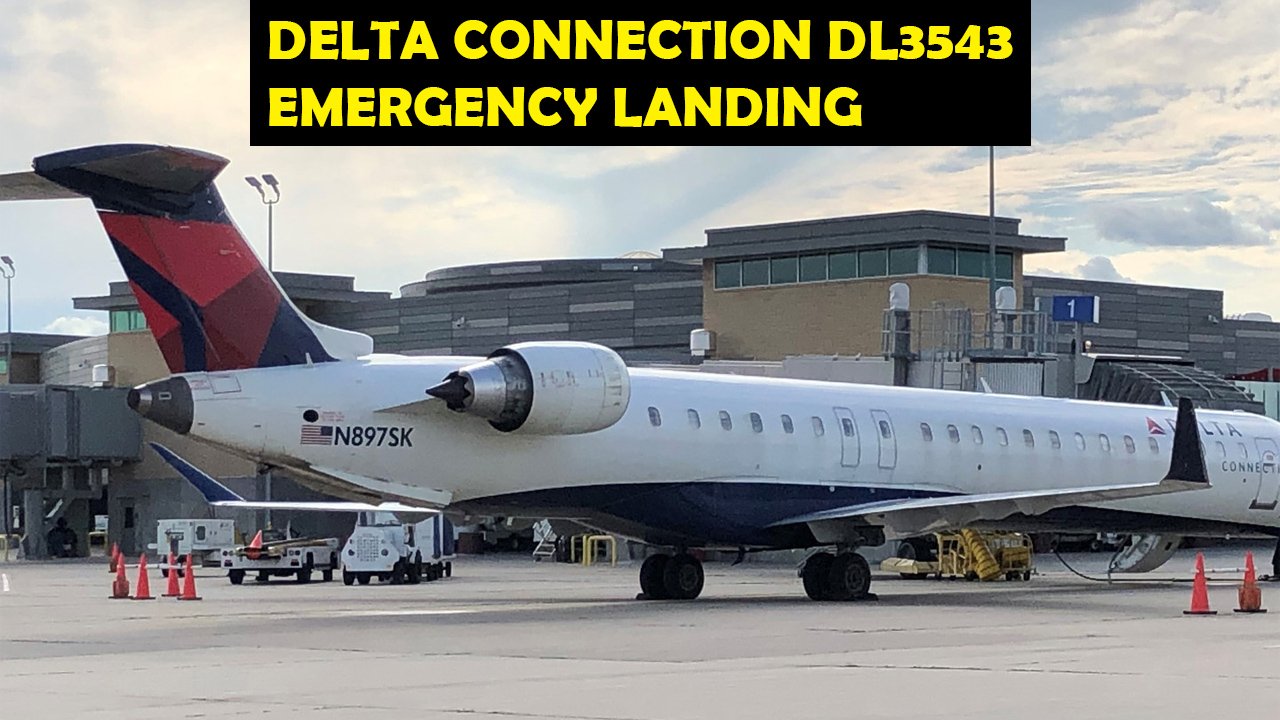
Delta Connection Flight DL3543 is a genuinely documented emergency return confirmed by flight-tracking data and aviation incident reporting, in which a regional jet bound for Chicago Midway climbed only briefly before the crew declared an emergency and returned to Minneapolis. This article explains what’s actually confirmed about the flight, the emergency declaration, and the outcome for passengers aboard.
What Flight Was Involved?
Delta Connection Flight DL3543 operated on July 7, 2025, using an Embraer 170-200LR/175LR regional jet registered N259SY, departing Minneapolis-Saint Paul International Airport bound for Chicago Midway International Airport on a regional connecting route.
Delta Connection flights are operated by regional airline partners under contract to Delta Air Lines, using smaller regional jet aircraft on shorter routes that connect smaller markets into Delta’s broader hub network, a common structure across major US carriers’ regional operations.
This specific flight number, aircraft registration, and route have been independently confirmed through flight-tracking records and aviation incident reporting published shortly after the event, giving the incident a solid, verifiable factual foundation beyond any single secondary source.
What Actually Happened After Takeoff?
The aircraft departed Minneapolis and began its climb toward cruising altitude, but stopped climbing at 21,000 feet only about ten minutes after takeoff, a noticeably early point in the flight for a crew to begin reversing course back toward the departure airport.
At this point, the crew declared an emergency using the transponder code 7700, the standard international signal pilots use to alert air traffic control that priority handling is needed, giving controllers advance notice to clear airspace and prepare emergency services if necessary.
The aircraft landed safely back at Minneapolis-Saint Paul on runway 12R approximately thirty-seven minutes after its original departure, a relatively short total flight time reflecting how quickly the crew responded to whatever prompted the decision to turn back.
What Caused the Emergency Declaration?
Available flight-tracking and aviation incident reporting sources covering this specific event do not specify the exact technical or operational cause behind the emergency declaration, noting only that the underlying reason remained under review in the immediate aftermath of the incident.
This kind of limited initial disclosure is common following an emergency declaration, since airlines and aviation authorities typically withhold specific technical details pending a fuller operational review, even when the outcome itself, a safe return and landing, is not in question.
Readers looking for the specific confirmed cause of this particular emergency should treat any claim asserting a definitive reason with caution unless it cites an official airline statement, NTSB filing, or similarly authoritative source directly addressing this flight.
How Did the Aircraft and Crew Respond?
Declaring an emergency using squawk code 7700 is a standard, well-established procedure that gives flight crews access to priority air traffic control handling regardless of the specific nature of the issue prompting the declaration, whether mechanical, medical, or otherwise.
The relatively short total flight time, roughly thirty-seven minutes from departure to landing, indicates the crew made a prompt decision to return rather than continuing toward Chicago or diverting to a different airport, suggesting a cautious, safety-first response to whatever was observed during the climb.
This kind of quick, decisive return to the departure airport is generally viewed within aviation safety practice as the appropriate response when a crew has any reason for concern, prioritizing a fast return to a known, familiar airport over continuing toward a more distant destination.
What Happened to Passengers Aboard?
Passengers aboard the flight disembarked safely following the aircraft’s return to Minneapolis, with no injuries reported in connection with the emergency declaration or the return landing itself, according to available incident reporting on the event.
The aircraft parked at gate C12 following the landing, and passengers would have needed to be rebooked onto a later flight to reach their original destination of Chicago Midway, consistent with standard airline practice following this kind of operational disruption.
Beyond the logistical disruption of a delayed arrival, incident coverage has noted that passengers aboard this kind of event commonly experience some degree of stress or concern during an in-flight emergency declaration, even when the outcome itself is a safe, uneventful landing.
How Common Are Emergency Declarations Like This One?
Flight crews declare emergencies using squawk 7700 more frequently than the term “emergency” might suggest to a general audience, since the code covers a wide range of situations where a crew wants priority handling as a precaution, not solely scenarios involving an imminent, severe safety threat.
Many squawk 7700 declarations resolve, as this one did, with a safe, uneventful landing and no injuries, reflecting the aviation industry’s generally cautious, safety-first approach to any observed anomaly during flight rather than indicating the situation was necessarily catastrophic.
Understanding this broader context helps readers interpret news of an “emergency landing” more accurately, recognizing that the term covers a wide range of severity levels, from minor precautionary returns to genuinely serious incidents.
What Should Travelers Know About Regional Jet Operations Like This?
Regional jets like the Embraer 170/175 series operate a substantial share of connecting flights within major US carriers’ networks, meaning incidents involving these smaller aircraft are a routine part of broader commercial aviation safety operations rather than an unusual occurrence specific to regional carriers.
Travelers concerned about a specific route or aircraft type can check an airline’s or route’s broader safety record through aviation industry data rather than drawing conclusions from a single reported incident, since isolated events like this one don’t necessarily indicate a broader pattern.
This kind of measured perspective helps travelers interpret individual incident reports like DL3543’s emergency landing within the appropriate broader context of an industry that handles a very large volume of daily flights with a strong overall safety record.
What Should You Check Before Trusting Claims About This Incident?
Checking a specific flight incident against independently sourced flight-tracking data and established aviation incident reporting is a reasonable step before accepting detailed claims about what happened during the flight. Airlive’s incident report on Delta Connection flight DL3543 documents the flight-tracking data and timeline behind this specific event.
Understanding how squawk code declarations and emergency landings are typically documented provides useful context for evaluating similar claims about other flights. The FAA’s information on transponder emergency codes explains how squawk 7700 and similar codes function within the air traffic control system.
Applying this same verification approach, checking flight-tracking data and established aviation reporting before accepting detailed incident claims, is a reliable habit when researching any specific flight disruption.
What Should You Take Away From This Overall?
Delta Connection Flight DL3543 is a genuinely documented incident in which a regional jet bound for Chicago Midway climbed only briefly before the crew declared an emergency and returned safely to Minneapolis, landing without injury roughly thirty-seven minutes after departure.
Readers can rely on the confirmed flight number, aircraft details, and timeline as established facts, while recognizing that the specific technical cause behind the emergency declaration has not been publicly detailed in available incident reporting.
What Happens After a Flight Crew Declares an Emergency?
Once a crew declares an emergency using squawk 7700, air traffic control typically clears surrounding airspace to give the aircraft priority routing back to a suitable airport, while also alerting airport emergency services to be ready in case they’re needed once the aircraft lands.
This precautionary preparation happens regardless of how serious the underlying issue turns out to be, since air traffic control and airport emergency crews generally treat every emergency declaration with the same immediate level of readiness until the situation is fully resolved on the ground.
In DL3543’s case, this precautionary response resulted in a safe, uneventful landing back at Minneapolis, with the emergency services presence reflecting standard procedure rather than any indication that a more serious incident was unfolding aboard the aircraft.
How Are Incidents Like This One Investigated?
Following an emergency declaration and return like this one, airlines typically conduct an internal review of the aircraft’s systems and the circumstances surrounding the crew’s decision, a standard practice regardless of whether the incident ultimately proves to involve a genuine mechanical issue or a more minor precautionary concern.
Depending on the specific nature of what prompted the emergency declaration, aviation safety authorities may also become involved in reviewing the incident, particularly if the review identifies a potential systemic issue worth flagging for the broader fleet or aircraft type involved.
The limited public detail available about DL3543’s specific cause is consistent with this kind of review process still being underway or having concluded without a finding significant enough to warrant separate public disclosure beyond the initial incident reporting.
What Should Passengers Do If They Experience a Similar Situation?
Following crew instructions calmly during an in-flight emergency declaration is the most important thing passengers can do, since flight crews are specifically trained to manage exactly this kind of situation and prioritize passenger safety throughout the process.
Passengers affected by a disruption like this one can typically expect the airline to provide rebooking onto a later flight to their original destination, consistent with standard practice following this kind of operational return to the departure airport.
Keeping a record of any specific inconvenience experienced, such as missed connections or significant delays, can be useful if a passenger later has questions about compensation or assistance eligibility connected to the specific disruption they experienced.
A Final Practical Note for Travelers
Travelers connecting through a regional hub like Minneapolis can benefit from building a little schedule flexibility into tight connections, since a precautionary return like DL3543’s, while resolved safely and without injury, still adds meaningful delay to onward travel plans for the passengers directly affected by the diversion. Staying calm and following crew guidance remains the most useful thing any passenger can do if a similar emergency declaration happens on a future flight they’re traveling on. Checking the airline’s official app for rebooking options as soon as a disruption is confirmed can also help travelers secure a seat on the next available flight more quickly and with less time spent waiting in a crowded gate agent line at a busy regional hub during a high-traffic travel period when connecting flights can fill up quickly once a disruption like this one is publicly announced to all affected passengers waiting patiently in line at the departure gate for an update.
Conclusion
Delta Connection Flight DL3543 is a genuinely documented incident in which a regional jet bound for Chicago Midway climbed only briefly before the crew declared an emergency and returned safely to Minneapolis without injury. Readers can rely on the confirmed flight details while recognizing the specific technical cause remains undisclosed in available reporting.
Frequently Asked Questions
What flight was involved in this emergency landing?
Delta Connection Flight DL3543, operated by an Embraer 170-200LR/175LR regional jet registered N259SY, was flying from Minneapolis to Chicago Midway on July 7, 2025, when the crew declared an emergency shortly after takeoff.
Why did the crew declare an emergency?
Available flight-tracking and incident reporting sources do not specify the exact cause, noting only that the crew stopped climbing at 21,000 feet about ten minutes after takeoff and declared an emergency using squawk code 7700.
Was anyone injured during the incident?
No injuries were reported in connection with the emergency declaration or the return landing, and the aircraft landed safely at Minneapolis-Saint Paul roughly thirty-seven minutes after its original scheduled departure time.
What does squawk code 7700 mean?
It’s the standard international transponder code pilots use to alert air traffic control that priority handling is needed, covering a wide range of situations from minor precautionary concerns to more serious emergencies.
Is this kind of emergency declaration unusual?
No, emergency declarations using squawk 7700 happen more often than the term might suggest and commonly resolve, as this one did, with a safe landing and no injuries, reflecting standard cautious aviation safety practice.


What Is Linkrify? A Plain-English Guide to Its Tools

MetALD: When Drinking and Metabolic Health Damage the Liver Together

How Does Webinkey.com Work? A Step-by-Step Overview

Afextop Com Explained: What It Is and How It Works

When Water Gets In: First 48 Hour Decisions That Save Walls, Floors, and Sanity

Reroof or Tear Off? Wet Climate Decisions That Make a New Roof Last in Seattle

Who Is Jaisal Andrews? Inside the Life of Naveen Andrews’ Son

Who Is Tanja Rosner? The Untold Life Story of Tate McRae’s Mother

Who Is Saffron Le Bon? The Untold Life Story of Benjamin Compston’s Wife

Who Is Kerri Browitt Caviezel? The Inspiring Life Story of Jim Caviezel’s Wife

Who Is Sue Johnston? The Remarkable Life Story of Joel Palmentor’s Mother

Who Is Otelia Cox? The Remarkable Life Story of Tony Cox’s Wife
-
 Celebrity2 months ago
Who Is Jaisal Andrews? Inside the Life of Naveen Andrews’ Son
-
 Celebrity2 months ago
Who Is Tanja Rosner? The Untold Life Story of Tate McRae’s Mother
-
 Celebrity2 months ago
Who Is Saffron Le Bon? The Untold Life Story of Benjamin Compston’s Wife
-
 Celebrity2 months ago
Who Is Kerri Browitt Caviezel? The Inspiring Life Story of Jim Caviezel’s Wife
-
 Celebrity2 months ago
Who Is Sue Johnston? The Remarkable Life Story of Joel Palmentor’s Mother
-
 Celebrity2 months ago
Who Is Otelia Cox? The Remarkable Life Story of Tony Cox’s Wife
-

 Software1 month ago
Voozon.com Explained: What It Really Is Behind the “Knowledge Platform” Label
-

 News2 months ago
Money6x.com: What This Personal Finance Platform Offers