Business
Everything You Need to Know About Sintered Metal Engineering

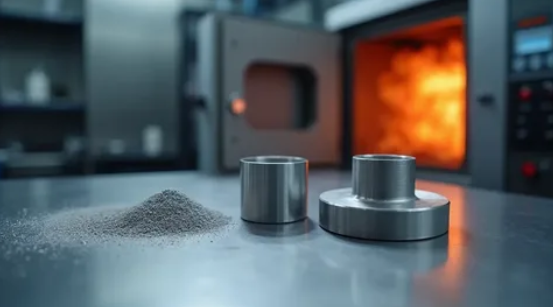
Producing strong metal parts is not always necessary through the process of melting the metal to a liquid state. The technology of producing metal through sintering uses another technique altogether, whereby metal particles are molded and heated below their melting point. This process produces strong and accurate parts using an efficient method of material use.
What Is Sintered Metal Engineering?
Sintered metal engineering is a manufacturing technique whereby compressed metal powder is processed into a solid and functional part. This manufacturing technique does not entail complete melting of the metal but rather involves using heat to stick individual powder particles.
This technique makes use of metals like iron, bronze, stainless steel, and other alloys. In addition, based on the type of metal used as well as the intended purpose, an engineer can change the powder characteristics.
The sintered metal engineering technique is particularly advantageous because it helps in making parts with uniform measurements and special characteristics.
How the Sintering Process Works
Even though there are many technicalities involved in the process of sintering, the process is relatively simple.
1. Powder Blending
The process starts with selected metal powders. Various powders can be mixed in order to get the desired properties of the part.
A small amount of lubricant or other additives can also be added. It is necessary to have proper mixing since the powder quality may influence the final product.
2. Compaction Creates the Shape
The powdered material is then put into a die and subjected to high pressure, creating a temporary component, which is also known as a green part.
It is at this point that the component gets its desired shape but not its strength yet. This is because it is essential that the density is even throughout the component since this will determine its behavior when heated.
3. Controlled Heating Bonds the Particles
The green body is then placed into an atmosphere-controlled furnace and heated to a temperature lower than the melting temperature of the material.
As the temperature increases, the particles start forming bonds between their contact points. This results in the development of mechanical properties in the component and gives it its required shape.
The atmosphere, temperature, heating rate, and holding time should all be strictly controlled. Small variations in these factors may affect the density, strength, and surface properties of the component.
4. Cooling and Finishing
The next step in the process is to cool the part following the sintering process. Cooling is done to help prevent any unwanted reactions from occurring due to the environment around the part.
There are components that do not need much done after sintering. There are components that will need additional operations performed after the sintering process is completed.
Why Is Sintered Metal Engineering Useful?
One of the main advantages of the process is efficient material use. Because components can be formed close to their final dimensions, there may be less waste than with manufacturing methods that remove significant amounts of material.
The process can also produce sintered metal components with shapes that would be difficult or expensive to manufacture through conventional machining. This can simplify production for parts containing detailed features, controlled dimensions, or specialized internal structures.
Control of porosity is another key benefit that this material offers. Rather than regarding porosity as an undesirable phenomenon, engineers can design the pores in the material to suit certain uses.
Self-lubricating bearings and filter elements are just two examples of how porosity can be controlled to make useful products. The fact that porosity can be designed according to one’s requirements is one of the defining features of sintered metals.
What Determines the Quality of a Sintered Metal Part?
The final property of the component is not determined by the furnace process alone. The entire process of manufacture plays a critical part in ensuring that the final output is achieved.
Properties of the powder will have an influence on how the material flows and packs. The die geometry will influence the dimensions of the green component. Pressure will influence how the powders pack, while sintering will influence how the powders bond.
Dimensional properties of the component are also important. Where there are strict dimensional tolerance requirements for a component, secondary sizing or machining after sintering might be necessary.
This explains why the manufacturing process of a sintered metal component needs to be controlled as a whole.
Where Are Sintered Metal Components Used?
Sintered metal parts are used in many applications that require repeated manufacture and reliable performance.
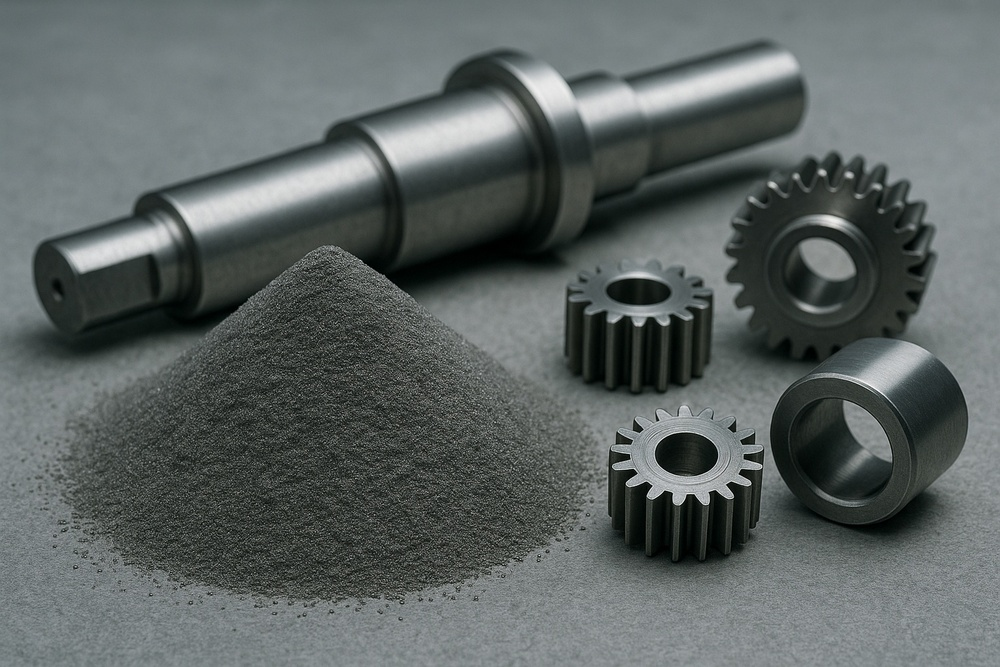
In the automotive sector, for example, the parts include gears, cams, bearings, and pulleys. In these parts, the repeatability of making consistent forms in high volumes can be an advantage of the process.
The aerospace industry may utilize parts like specialized turbine and engine parts, where the choice of material and manufacturing are very important.
The medical industry uses sintered parts too, in some applications, such as titanium and cobalt-chrome parts.
What Should You Consider Before Choosing the Process?
Sintering of metals is certainly not an automatic process to be used for all components. The geometrical aspects of the component, materials required, production volume, tolerances, and the conditions under which the component will run need to be considered.
Production volume is especially important due to tooling being a part of the process. With large numbers of components needed, near-net-shape manufacturing becomes a definite advantage.
Density and porosity requirements should be established at an early stage as well. These properties can have an effect on strength, wear resistance, lubrication, filtration, etc.
Making the Right Manufacturing Approach Count
Comprehension of the entire process facilitates the ability to determine where sintered metal engineering processes fall in contemporary manufacturing practice. The importance of the process lies in bringing together powder processing, compaction, heating, and finishing into one process.
To provide an example, Volunteer Sintered Products participates in the production of sintered metal parts without necessarily considering the process. Engineering judgment is always guided by an appreciation of the material, the process, and the demands of the part being produced.


Who Is Jefferson Salvini Randall? The Amazing Life Story of Tony Randall’s Son

Who Is Melissa Esplana? The Amazing Life Story of Dusty Baker’s Wife

AdsTotally.com Explained: Ad-Network Name, Guest-Post Reality

The Importance of Sun Protection in Children’s Swimwear

BlessingTide.com Explained: From Faith Content to General Interest

Who Is Riley Mandel? The Inspiring Journey of Howie Mandel’s Daughter

Who Is Jaisal Andrews? Inside the Life of Naveen Andrews’ Son

Who Is Saffron Le Bon? The Untold Life Story of Benjamin Compston’s Wife

Who Is Tanja Rosner? The Untold Life Story of Tate McRae’s Mother

Voozon.com Explained: What It Really Is Behind the “Knowledge Platform” Label

Who Is Sue Johnston? The Remarkable Life Story of Joel Palmentor’s Mother

Who Is Kerri Browitt Caviezel? The Inspiring Life Story of Jim Caviezel’s Wife
-
 Celebrity2 months ago
Who Is Jaisal Andrews? Inside the Life of Naveen Andrews’ Son
-
 Celebrity2 months ago
Who Is Saffron Le Bon? The Untold Life Story of Benjamin Compston’s Wife
-
 Celebrity2 months ago
Who Is Tanja Rosner? The Untold Life Story of Tate McRae’s Mother
-
 Software3 weeks ago
Voozon.com Explained: What It Really Is Behind the “Knowledge Platform” Label
-
 Celebrity2 months ago
Who Is Sue Johnston? The Remarkable Life Story of Joel Palmentor’s Mother
-
 Celebrity2 months ago
Who Is Kerri Browitt Caviezel? The Inspiring Life Story of Jim Caviezel’s Wife
-

 Celebrity1 month ago
Who Is Otelia Cox? The Remarkable Life Story of Tony Cox’s Wife
-

 Technology1 month ago
TheSindi Com Explained: What to Verify Before Trusting This Site