Blog
Air France A350 Chicago Flight Return Explained: Why AF136 Turned Back

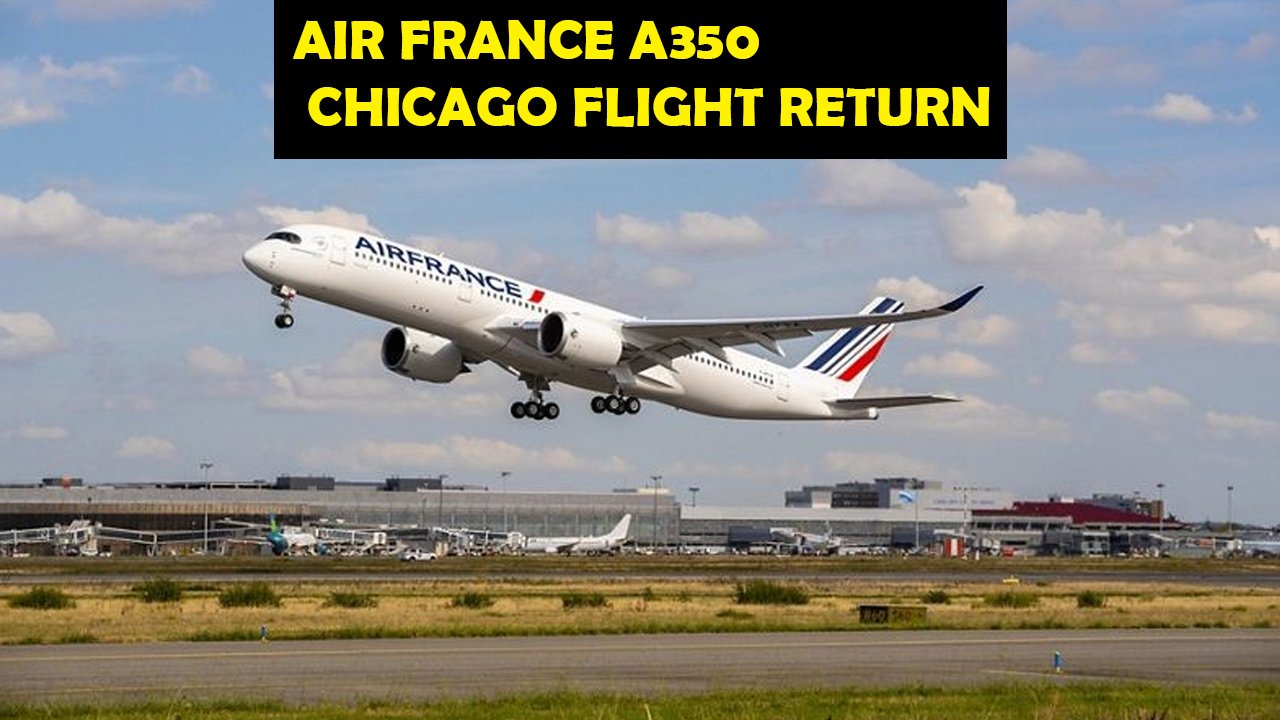
Air France Flight AF136 is a genuinely documented incident confirmed by flight-tracking data, aviation news outlets, and Air France’s own statement, in which an Airbus A350-900 bound for Chicago reversed course over the mid-Atlantic and returned to Paris after being denied landing clearance at Chicago O’Hare. This article explains what’s actually confirmed about the flight, why it turned back, and what happened to affected passengers.
What Flight Was Involved?
Air France Flight AF136 operated on June 28, 2025, using an Airbus A350-900 registered F-HUVR, departing Paris-Charles de Gaulle Airport at 12:49 local time bound for Chicago O’Hare International Airport on a scheduled transatlantic route.
The A350-900 is Airbus’s long-range, twin-engine wide-body aircraft, commonly used by Air France on transatlantic routes given its extended range capability and fuel efficiency compared to older wide-body aircraft types still in service across many long-haul fleets.
This specific aircraft and flight number combination has been independently confirmed through flight-tracking records and multiple aviation news sources reporting on the incident shortly after it occurred, giving the event a solid, traceable factual foundation.
What Actually Happened During the Flight?
The aircraft climbed to a cruising altitude of 38,000 feet after departing Paris, and the flight proceeded normally for approximately six and a half hours, reaching a position over the mid-Atlantic between Iceland and Greenland before the crew made the decision to reverse course.
Flight-tracking data confirms the aircraft turned back toward Europe at this point in the journey, a decision made well before reaching North American airspace, suggesting the crew and airline had enough advance notice of the landing clearance issue to make a considered operational decision rather than reacting to an in-the-moment emergency.
The aircraft ultimately landed safely back at Paris-Charles de Gaulle after a total flight time of six hours and thirty-seven minutes, a round trip that consumed substantial fuel and crew duty time without the flight ever reaching its intended destination.
Why Was the Flight Denied Landing Clearance?
Air France’s official statement attributed the return specifically to “operational reasons” at Chicago O’Hare, without providing further public detail about the precise nature of the clearance issue that prevented the flight from landing as scheduled.
Passenger reports and aviation news coverage have generally connected the incident to the flight not receiving landing authorization at O’Hare, consistent with the kind of air traffic control or airport capacity issue that can occasionally affect long-haul flights arriving at busy hub airports during periods of high traffic or operational strain.
Airlines and airports do not always disclose the specific underlying cause of this kind of operational denial publicly, meaning the exact reason behind the clearance issue at O’Hare that day remains something Air France has not detailed beyond its general operational reasons statement.
How Did Air France Handle Affected Passengers?
Air France provided overnight accommodations for passengers affected by the diversion back to Paris, a standard practice among major airlines when a long-haul flight fails to reach its destination and passengers require lodging before a replacement journey can be arranged.
Affected passengers were rebooked onto a replacement flight, AF4080, which departed the following day at 14:20 local time, allowing passengers to complete their journey to Chicago roughly a full day later than originally scheduled.
This kind of rebooking and accommodation response is consistent with standard airline practice for significant flight disruptions, reflecting established passenger service procedures major international carriers generally follow when a long-haul flight is forced to return to its origin.
Why Do Long-Haul Flights Sometimes Get Denied Landing Clearance?
Landing clearance denials at busy hub airports can stem from several operational factors, including air traffic control capacity constraints, runway availability issues, weather conditions at the destination, or occasionally administrative or documentation issues affecting a specific flight’s approach.
Chicago O’Hare is one of the busiest airports in the world by flight volume, a factor that can increase the likelihood of capacity-related delays or clearance issues during periods of high traffic, though this doesn’t confirm the specific cause behind this particular incident.
Understanding this broader operational context helps explain why a well-established airline flying a modern aircraft on a routine transatlantic route can still experience this kind of significant, costly disruption despite having no apparent mechanical or safety-related problem with the aircraft itself.
How Does This Compare to Other Transatlantic Flight Diversions?
Transatlantic flights occasionally return to their origin airport for a range of reasons, including mechanical issues, medical emergencies, and weather, making an operationally driven return like AF136’s relatively unusual in that it stemmed specifically from a destination-airport clearance issue rather than a problem with the aircraft or its passengers.
This distinction matters for understanding the incident’s actual cause, since it reflects an issue with air traffic coordination and airport operations rather than any mechanical, safety, or medical concern involving the aircraft or the people aboard it.
Readers researching similar transatlantic flight disruptions can use this same distinction, checking whether a specific incident stemmed from an aircraft or passenger issue versus a destination-airport operational issue, to better understand the nature and likely resolution timeline of a similar disruption.
What Should You Check Before Trusting Claims About This Incident?
Checking a specific flight incident against independently sourced flight-tracking data and established aviation news coverage is a reasonable step before accepting detailed claims about what happened during the flight. FlightAware’s incident report on Air France A350 flight AF136 documents the flight-tracking data behind this specific incident.
Understanding how established aviation news outlets independently verify and report incidents like this provides useful context for evaluating similar claims about other flights. Aviation A2Z’s coverage of the Air France A350 Chicago clearance denial documents the specific flight number, aircraft registration, and timeline confirmed for this incident.
Applying this same verification approach, checking flight-tracking data and established aviation journalism before accepting detailed incident claims, is a reliable habit when researching any specific flight disruption.
What Should You Take Away From This Overall?
Air France Flight AF136 is a genuinely documented incident in which an A350-900 turned back over the mid-Atlantic and returned to Paris after being denied landing clearance at Chicago O’Hare, with Air France citing unspecified operational reasons for the decision.
Readers can rely on the confirmed flight number, aircraft registration, timeline, and passenger rebooking details as established facts, while recognizing that the specific underlying cause of the O’Hare clearance denial has not been publicly detailed by either airline or airport officials.
How Do Airlines Decide Whether to Turn Back Mid-Flight?
Airlines and flight crews weigh several factors when deciding whether to continue toward a destination or reverse course mid-flight, including remaining fuel reserves, the aircraft’s current position relative to suitable alternate airports, and how much advance notice they have of the issue prompting the decision.
For AF136, the decision to turn back came roughly six and a half hours into the flight while the aircraft was still over the mid-Atlantic, a position that made returning to Paris a more practical option than attempting to divert to a different North American airport with uncertain clearance availability.
This kind of decision-making reflects standard airline operational practice, prioritizing a return to a known, familiar airport with confirmed clearance availability over pressing forward toward a destination where landing authorization remains uncertain.
What Costs Does an Airline Absorb in This Kind of Situation?
A flight returning to its origin after flying for more than six hours represents a substantial operational cost for an airline, including wasted fuel, additional crew duty time, aircraft scheduling disruption, and the cost of overnight accommodations and rebooking for affected passengers.
Beyond the direct financial cost, this kind of significant disruption can also create downstream scheduling effects, potentially delaying the same aircraft’s next scheduled flight and requiring the airline to adjust crew assignments to remain within regulated duty-time limits.
Airlines generally absorb these costs as a routine, if unwelcome, part of long-haul operations, reflecting the reality that even well-planned flights can occasionally encounter operational issues at the destination that are outside the airline’s direct control.
What Rights Do Passengers Have During This Kind of Disruption?
Passengers affected by a significant flight disruption like a mid-flight return generally have rights to care and assistance under applicable aviation regulations, which can include meals, accommodation, and rebooking depending on the specific circumstances and the regulatory framework covering the flight.
European Union passenger rights regulations, which generally apply to flights departing EU airports like this one did from Paris, establish specific requirements for airlines regarding passenger care during significant delays and disruptions, though compensation eligibility can depend on the specific circumstances behind the disruption.
Passengers affected by a similar disruption in the future can reasonably expect an airline to provide the kind of accommodation and rebooking support Air France provided in this case, consistent with both regulatory requirements and standard industry practice for significant long-haul disruptions.
A Final Practical Note for Travelers
Travelers with a long-haul connection booked shortly after arrival can benefit from building in some schedule flexibility where possible, since a disruption like AF136’s, while uncommon, illustrates how even a well-planned transatlantic journey operated by a major, experienced carrier can occasionally require an unplanned extra day to reach its intended destination safely. Travel insurance covering flight disruption can also help offset unexpected costs tied to this kind of significant, unplanned delay, particularly for travelers with tight onward connections or time-sensitive plans at their final destination. Checking an airline’s official app or website for real-time status updates during a long-haul journey is another practical habit, since it often provides faster, more accurate information than secondary news coverage produced after the fact. Keeping a copy of the airline’s customer service contact information accessible while traveling can also help speed up rebooking arrangements should a similar significant disruption occur on a future trip, particularly during a long, unplanned layover in an unfamiliar city far from home, when finding suitable lodging and food on short notice can otherwise become an added, unwelcome source of stress for tired passengers already dealing with a significantly longer journey than they had originally planned for when they first booked their transatlantic trip weeks or even months in advance of the original scheduled departure date and time for their long-planned, carefully budgeted international trip abroad this particular travel calendar year.
Conclusion
Air France Flight AF136 is a genuinely documented incident in which an A350-900 turned back over the mid-Atlantic and returned to Paris after being denied landing clearance at Chicago O’Hare, with the airline citing unspecified operational reasons. Readers can rely on the confirmed flight details while recognizing the exact underlying cause remains undisclosed.
Frequently Asked Questions
What flight was involved in this incident?
Air France Flight AF136, operated by an Airbus A350-900 registered F-HUVR, was flying from Paris-Charles de Gaulle to Chicago O’Hare on June 28, 2025, when it turned back over the mid-Atlantic.
Why did the flight return to Paris?
Air France cited unspecified “operational reasons” connected to the flight not receiving landing clearance at Chicago O’Hare, though the airline has not publicly detailed the exact underlying cause of the clearance issue.
How long was the flight before it turned back?
The aircraft flew for approximately six and a half hours, reaching a position over the mid-Atlantic between Iceland and Greenland, before reversing course and landing back at Paris after six hours and thirty-seven minutes total.
What happened to passengers affected by the return?
Air France provided overnight accommodations and rebooked affected passengers onto a replacement flight, AF4080, which departed for Chicago the following day at 14:20 local time as originally scheduled for that route.
Is this kind of flight return common?
Long-haul flights occasionally return to origin for mechanical, weather, or medical reasons, but a return specifically caused by a destination-airport clearance issue like this one is comparatively less common and reflects an air traffic operational matter.


Who Is Jefferson Salvini Randall? The Amazing Life Story of Tony Randall’s Son

Who Is Melissa Esplana? The Amazing Life Story of Dusty Baker’s Wife

AdsTotally.com Explained: Ad-Network Name, Guest-Post Reality

The Importance of Sun Protection in Children’s Swimwear

BlessingTide.com Explained: From Faith Content to General Interest

Who Is Riley Mandel? The Inspiring Journey of Howie Mandel’s Daughter

Who Is Jaisal Andrews? Inside the Life of Naveen Andrews’ Son

Who Is Saffron Le Bon? The Untold Life Story of Benjamin Compston’s Wife

Who Is Tanja Rosner? The Untold Life Story of Tate McRae’s Mother

Voozon.com Explained: What It Really Is Behind the “Knowledge Platform” Label

Who Is Sue Johnston? The Remarkable Life Story of Joel Palmentor’s Mother

Who Is Kerri Browitt Caviezel? The Inspiring Life Story of Jim Caviezel’s Wife
-
 Celebrity2 months ago
Who Is Jaisal Andrews? Inside the Life of Naveen Andrews’ Son
-
 Celebrity2 months ago
Who Is Saffron Le Bon? The Untold Life Story of Benjamin Compston’s Wife
-
 Celebrity2 months ago
Who Is Tanja Rosner? The Untold Life Story of Tate McRae’s Mother
-
 Software3 weeks ago
Voozon.com Explained: What It Really Is Behind the “Knowledge Platform” Label
-
 Celebrity2 months ago
Who Is Sue Johnston? The Remarkable Life Story of Joel Palmentor’s Mother
-
 Celebrity2 months ago
Who Is Kerri Browitt Caviezel? The Inspiring Life Story of Jim Caviezel’s Wife
-

 Celebrity1 month ago
Who Is Otelia Cox? The Remarkable Life Story of Tony Cox’s Wife
-

 Technology1 month ago
TheSindi Com Explained: What to Verify Before Trusting This Site