Business
Planning a Rigorous High School Medical Neuroscience Project: A Short Program Blueprint

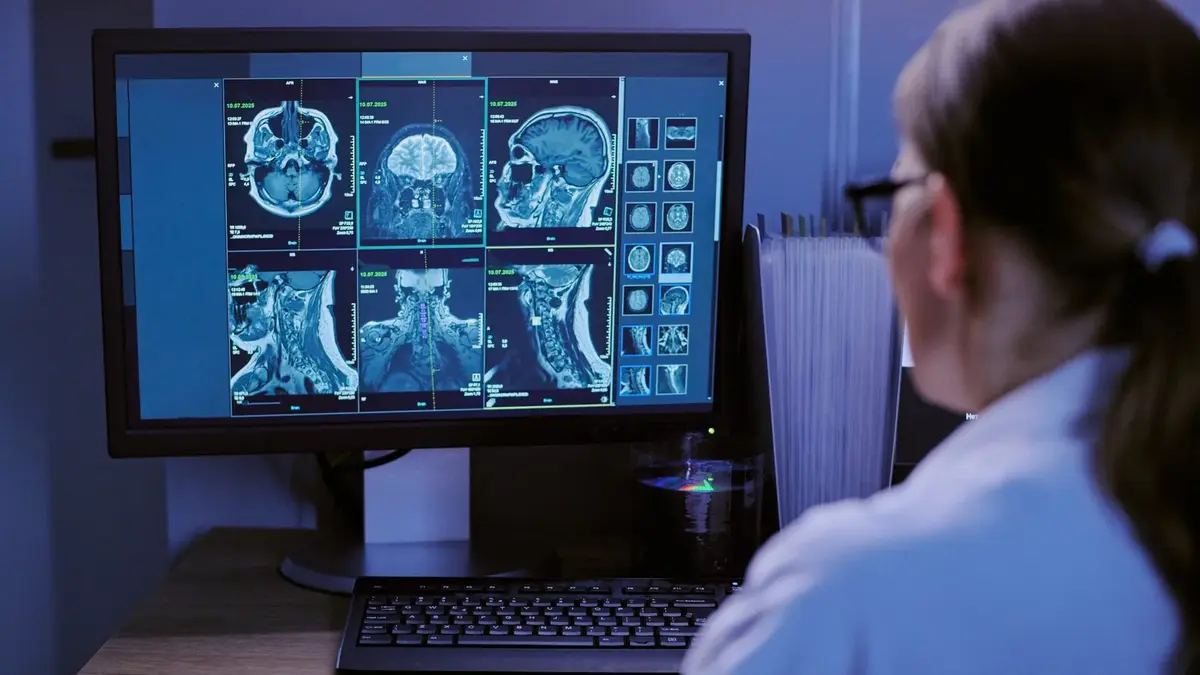
Short summer programs move fast, but you can still deliver a serious medical neuroscience project with clear structure, sound methods, and ethical guardrails. The key is to make choices that fit a tight timeline while staying rooted in real neurobiology. That means translating a clinical question into a tractable design, selecting tools you can actually use (from EEG and cognitive tasks to vetted open datasets), and reporting results with limits, not hype. The outline below shows how students can shape work around concrete elements like the prefrontal cortex and working memory, EEG artifact control, and patient privacy rules such as HIPAA, without needing a fully equipped lab.
- Choose a Clinical Question You Can Test in Weeks
Start with a targeted, testable question tied to a brain system or symptom pathway. For example: Does short-term sleep restriction impair working memory via changes in dorsolateral prefrontal cortex function? Naming a circuit and an outcome steers everything that follows, from task selection (n-back test) to instrumentation (EEG for millisecond timing of event-related potentials). Reading program descriptions such as https://lichangesummer.org/medical-neuroscience/ can help you confirm alignment between a topic and available mentorship, then refine your scope so the project fits the calendar.
Two realistic scenarios show what “right sized” looks like. Scenario one: You examine whether caffeine alters reaction time after sleep loss using a simple psychomotor vigilance task, focusing on attention networks and the locus coeruleus norepinephrine system in your discussion. Scenario two: You review concussion case reports and chart vestibulo-ocular reflex recovery versus symptom scales, linking findings to the cerebellum and cranial nerve VIII. In both, the brain region and outcome are concrete, and the data sources are feasible within weeks.
- Match Methods to Constraints: EEG, Imaging, or Open Data
Your method must fit time, access, and learning curve. EEG offers high temporal resolution to track action potentials’ summed postsynaptic activity and event-related potentials during tasks, is portable, and is manageable for students. fMRI provides superior spatial resolution for structures like the hippocampus or basal ganglia, but it is expensive and rarely available for direct student use in short programs. Open repositories (for example, publicly available EEG or fMRI sets) let you analyze real signals without collecting them, a strong route when hardware or clinical recruitment is out of reach.
Tradeoffs are real. EEG’s timing strengths come with susceptibility to artifacts from eye blinks (EOG) and muscle activity (EMG). Correct 10 to 20 system electrode placement and a dedicated EOG channel help you detect and reject these artifacts. If imaging appeals, use diffusion tensor imaging write-ups as background rather than data you collect; instead, use cognitive paradigms like Stroop or n-back to probe prefrontal function. When collection is impossible, predefine an analysis using a vetted open dataset and focus on replicating a published effect rather than inventing a sprawling set of hypotheses.
- Ethics First: Human Subjects, HIPAA, and Deidentification
Decide early whether your work involves human subjects. If you collect any new data from people, even simple surveys, ask a mentor about required oversight. Educational projects that use fully de-identified, public datasets often fall outside formal IRB review, but you must verify this. Never handle protected health information; HIPAA requires removing identifiers such as names, dates of birth, and medical record numbers. When in doubt, switch to public datasets, published case reports, or simulations, and document how you protected privacy.
A common mistake is casually collecting classroom survey data with names or emails attached, then learning it cannot be used. Instead, generate random participant codes, store response files in secure folders, and keep consent or assent language in plain English. If you shadow in a clinic, do not record patient details; write process reflections about diagnostic pathways (for example, how neurologists test cranial nerves or interpret Babinski sign) and link them to neuroanatomy without storing any patient data.
- Analysis That Holds Up: From Artifact Rejection to Statistics
Predefine your pipeline. For EEG, that might mean band-pass filtering (for example, 0.1 to 30 Hz), epoching around stimulus onset, baseline correction, and rejecting epochs with EOG spikes above a set threshold. Choose a primary metric such as P300 amplitude or alpha power over the parietal cortex, then pick statistics that match the design (paired t tests for within-subjects, or regression if you include covariates like sleep hours). Avoid p-hacking by setting hypotheses first and limiting the number of outcomes you test.
Imaging or multichannel analyses increase multiple-comparison risk. If you examine many electrodes or regions of interest (ROIs), use corrections such as false discovery rate. Do not define ROIs using the same data you test; that circularity inflates effects. When discussing localization, report standard spaces (for example, MNI coordinates) and name regions precisely, such as anterior hippocampus versus posterior hippocampus. Finally, describe the confounds you checked: Did you control for caffeine intake, time-of-day effects, or baseline reaction time? Clear controls make small datasets more credible.
Present Like a Young Researcher: Structure, Limits, and Next Steps
Organize the write-up like a brief manuscript: an abstract that states the question and main finding; an introduction that names the pathway (say, glutamatergic signaling in the prefrontal cortex); methods with enough detail to reproduce your n-back timing or EEG preprocessing; results with figures that show scalp maps, ERPs, or reaction time distributions; and a discussion that ties findings to clinical relevance. For instance, connect attention fluctuations to ADHD literature cautiously, or relate motor imagery beta suppression to basal ganglia loops without overclaiming causality.
Close by owning limits and charting realistic next steps. If your sample size is small, explain how power affects detection of subtle effects. If you used open data, note that you replicated an effect and propose a follow-up with a new dataset or a different ROI. If your project was case-based, suggest a protocol for a future prospective series that includes standardized tests like the Montreal Cognitive Assessment. Short programs reward focus: when you choose a tractable question, respect ethics, and align tools with constraints, you can produce a medical neuroscience project that is both modest in scope and strong in substance.


Who Is Jefferson Salvini Randall? The Amazing Life Story of Tony Randall’s Son

Who Is Melissa Esplana? The Amazing Life Story of Dusty Baker’s Wife

AdsTotally.com Explained: Ad-Network Name, Guest-Post Reality

The Importance of Sun Protection in Children’s Swimwear

BlessingTide.com Explained: From Faith Content to General Interest

Who Is Riley Mandel? The Inspiring Journey of Howie Mandel’s Daughter

Who Is Jaisal Andrews? Inside the Life of Naveen Andrews’ Son

Who Is Saffron Le Bon? The Untold Life Story of Benjamin Compston’s Wife

Who Is Tanja Rosner? The Untold Life Story of Tate McRae’s Mother

Voozon.com Explained: What It Really Is Behind the “Knowledge Platform” Label

Who Is Sue Johnston? The Remarkable Life Story of Joel Palmentor’s Mother

Who Is Kerri Browitt Caviezel? The Inspiring Life Story of Jim Caviezel’s Wife
-
 Celebrity2 months ago
Who Is Jaisal Andrews? Inside the Life of Naveen Andrews’ Son
-
 Celebrity2 months ago
Who Is Saffron Le Bon? The Untold Life Story of Benjamin Compston’s Wife
-
 Celebrity2 months ago
Who Is Tanja Rosner? The Untold Life Story of Tate McRae’s Mother
-
 Software3 weeks ago
Voozon.com Explained: What It Really Is Behind the “Knowledge Platform” Label
-
 Celebrity2 months ago
Who Is Sue Johnston? The Remarkable Life Story of Joel Palmentor’s Mother
-
 Celebrity2 months ago
Who Is Kerri Browitt Caviezel? The Inspiring Life Story of Jim Caviezel’s Wife
-
 Celebrity1 month ago
Who Is Otelia Cox? The Remarkable Life Story of Tony Cox’s Wife
-

 Technology1 month ago
TheSindi Com Explained: What to Verify Before Trusting This Site